
TL;DR: Neighborhood page SEO for real estate is the practice of building dedicated, data-rich local pages that target hyperlocal search queries like “homes for sale in [neighborhood name]” or “best areas to live in [city]”. These pages let independent agents compete against Zillow and Redfin on specific community-level searches where portals publish generic content. According to Semrush’s 2025 data, Google AI Overviews appear on 88 percent of informational queries, including neighborhood research searches. According to Ahrefs’ AI Overview study, only 38 percent of those AI citations come from top-10 organic results. A specific, well-structured neighborhood page on a local agent’s site can earn AI citations and map pack placement that a portal page, built for scale rather than depth, consistently misses.
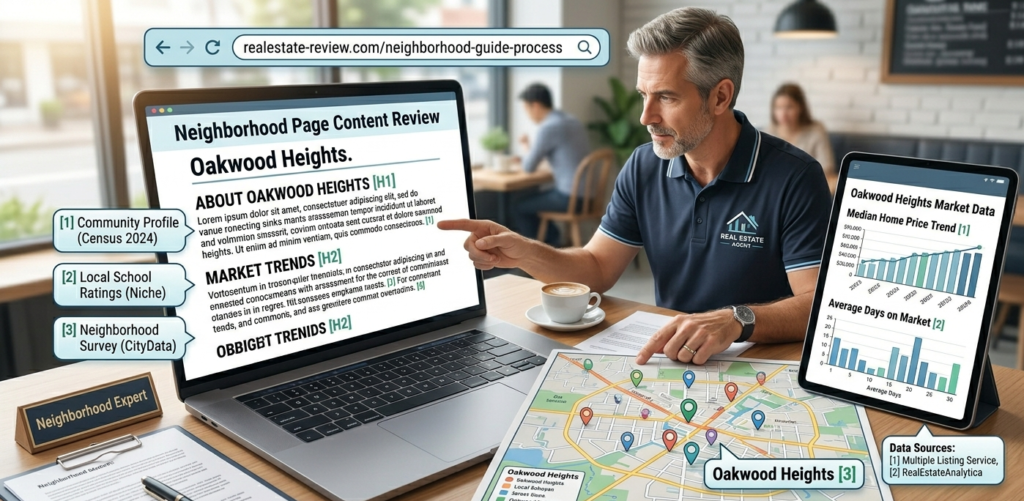
Zillow and Redfin have more backlinks, more domain authority and bigger development budgets than any independent agent will ever match head-to-head. But they also publish at massive scale, which means their neighbourhood content is often thin, template-driven and short on the specific local knowledge that search engines and AI tools increasingly reward. That gap is where neighbourhood page SEO for real estate works. An agent who actually knows a community, writes about it with real data and structures those pages correctly can consistently outrank portals on the queries that matter most: the ones that bring ready buyers and sellers.
Why Neighborhood Pages Outrank City Pages for Real Estate Agents
Neighbourhood pages outrank city pages for local real estate agents because they target narrower, higher-intent queries with less competition and more specific relevance signals. A buyer searching “family-friendly streets near [school name] in [suburb]” is closer to a transaction than someone searching “[city] real estate agent.”
Google’s local ranking algorithm rewards proximity and relevance. A neighbourhood page targeting a specific postcode or suburb area signals relevance to that exact location far more precisely than a city-level service page. For agents competing against portals with broad geographic coverage, specificity is the strategic advantage.
The intent difference that changes everything
City-level pages target researchers. Neighbourhood pages target buyers. A user on a neighbourhood page already knows they want that area. They need specific information: school ratings, commute times, recent sold prices and what the street actually feels like. An agent who provides that information earns both the ranking and the trust that leads to contact.
What Makes a Real Estate Neighborhood Page Thin?
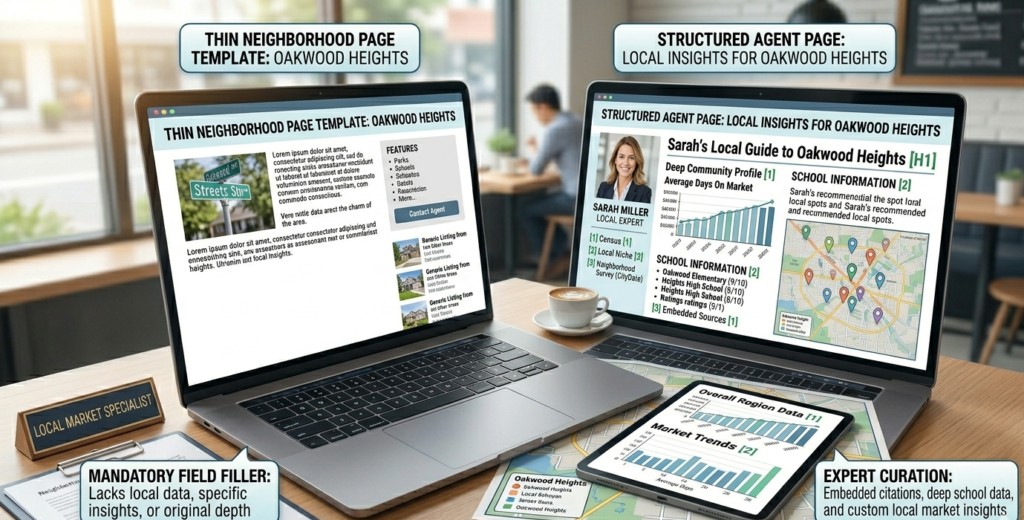
A thin neighbourhood page is one that contains fewer than 400 words of original content, relies on an IDX listing feed as its primary content and provides no local information that Google could not extract from a generic directory listing.
Most agent neighbourhood pages fail because they replicate the same template across 20 locations, changing only the suburb name. Google’s Helpful Content system, updated in September 2023, actively downgrades this type of content. According to Google’s documentation on helpful content, pages that exist primarily for search engines rather than to inform real users earn lower quality ratings across the board.
The five signals of a thin neighbourhood page
- No original descriptive copy about the area
- Lack of local data: school ratings, average sold prices or commute benchmarks
- No agent commentary or first-person local knowledge
- Lack of internal links to relevant listings or related suburb pages
- No FAQ section addressing real buyer questions about that community
What to Include on Every Real Estate Neighborhood Page
A high-performing neighbourhood page for real estate SEO includes a direct answer to “what is [neighbourhood] like,” specific local data, a school section, a recent market snapshot, a FAQ block and an internal link to active listings in that area. Each element serves both the reader and the search engine.
Here is the structure I recommend for every neighbourhood page:
| Section | Content | SEO benefit |
| Opening answer capsule | 60-word direct description of the area | AI citation and featured snippet |
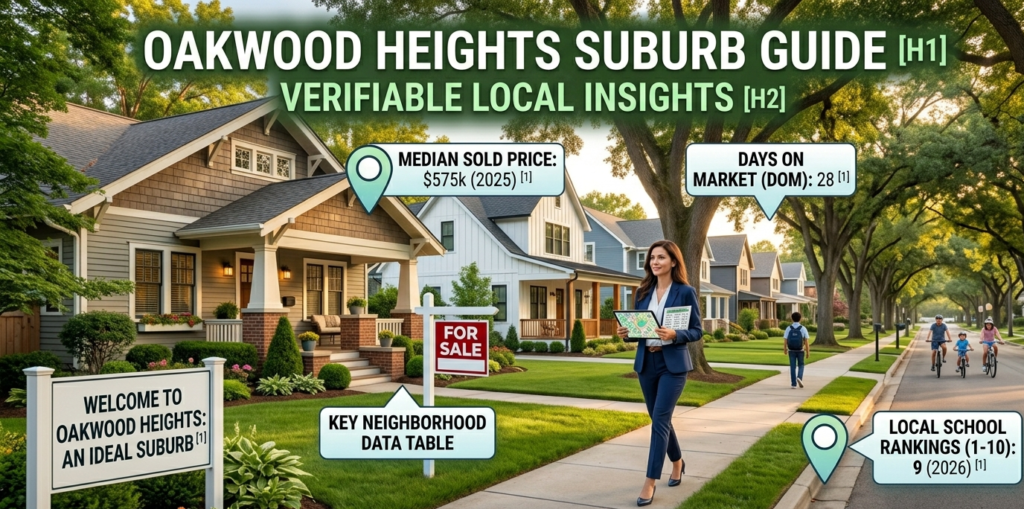
| Local data table | Median sold price, average days on market, school rating | Entity and data signal |
| Schools section | Named schools with GreatSchools or Ofsted ratings | Named entity density |
| Commute and amenities | Distance to key transit, shops and employers | Local relevance signal |
| Agent commentary | First-person insight on the area’s character | E-E-A-T and trust signal |
| Recent market update | 3 to 6 month price trend with dates | Freshness signal |
| FAQ section with schema | 4 to 6 buyer questions answered directly | Featured snippet and AEO |
| CTA and listings link | Link to active IDX listings in that suburb | Conversion and internal linking |
According to Princeton’s 2025 research cited by Search Engine Journal, content with named sources and statistics lifts AI visibility by over 40 percent. Naming the school, the train station and the nearby employer by name on a neighbourhood page builds exactly the entity density that improves AI citation probability.
I cover the broader GEO content structure behind AI citations on my blog covering AI search and local SEO strategy.
Can Neighborhood Pages Really Rank Against Zillow and Redfin?
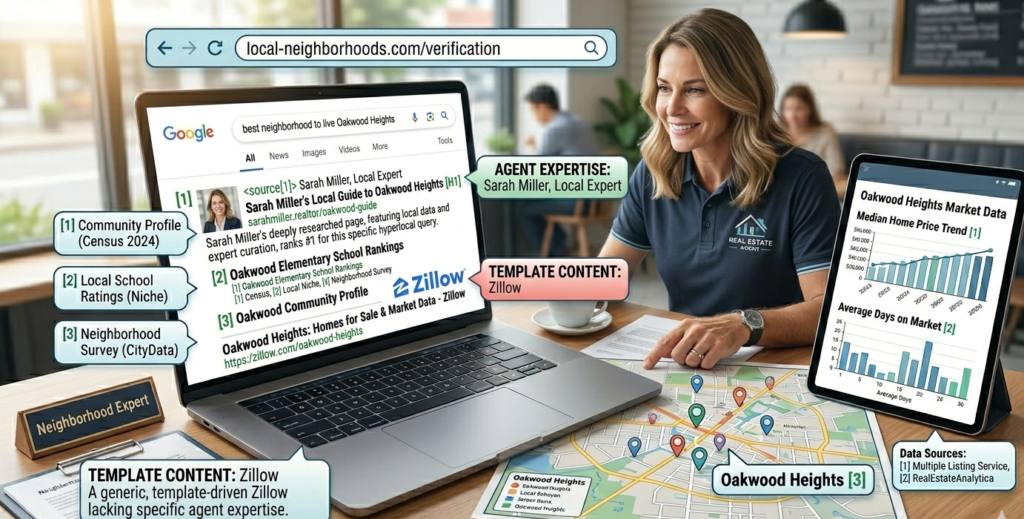
Yes, on specific hyperlocal queries, neighbourhood pages from independent agent sites regularly outrank Zillow and Redfin. The portals cannot produce genuinely local content at scale. Their suburb pages follow a template: a listing feed, a median price pulled from public data and a short paragraph that applies to almost anywhere.
An agent page that names specific streets, references the local primary school by name, notes that the weekend market runs on Saturday mornings and includes a quote from a recent buyer provides a depth of relevance that no portal template matches. Google and AI engines both reward that specificity.
BrightLocal’s 2024 Local Consumer Review Survey found that 98 percent of consumers read online reviews and local information before contacting a local business. For real estate, that behaviour extends to neighbourhood research. Buyers spend weeks reading suburb guides before they book a viewing. An agent who owns that research phase owns the relationship before the first call.
How Often Do Real Estate Neighborhood Pages Need to Be Updated?
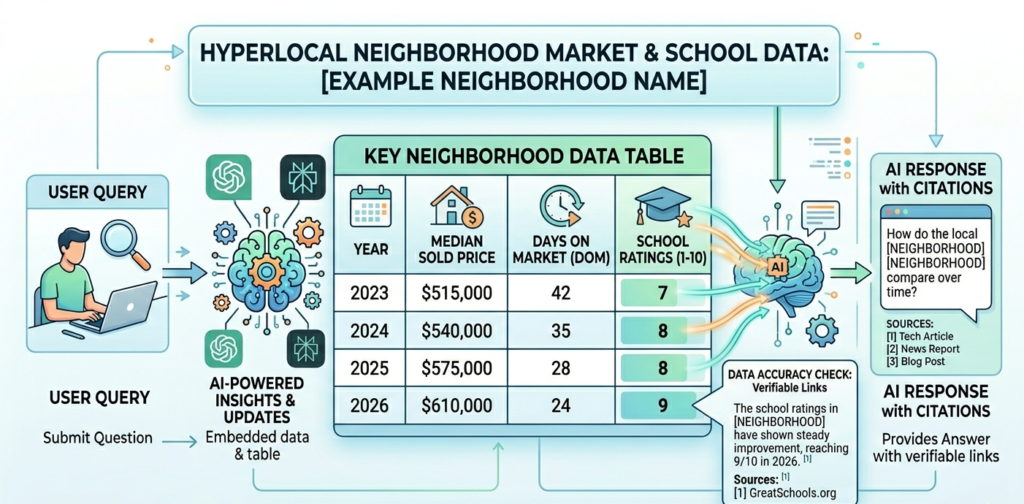
Real estate neighbourhood pages need a market data update at least every 90 days to maintain freshness signals and ranking stability. Google treats stale pricing data as a quality signal. A page showing 2023 median prices in 2026 signals neglect, and competitors with updated pages will overtake it.
The non-data content, including the school section, commute information and area description, needs reviewing once per year or when a significant local change occurs, such as a new development, school rezoning or major employer relocation.
The fastest update method is a “Last updated [Month Year]” timestamp at the top of the page combined with a refreshed market data table. This signals freshness to Google Search Console crawlers without requiring a full rewrite. For agents managing 15 or more neighbourhood pages, a quarterly update schedule across all pages is practical with a structured content template.
My real estate and local SEO content services page outlines how I structure and update neighborhood pages for agents on ongoing retainers.
How Many Neighborhood Pages Should a Real Estate Agent Have?
Build one neighbourhood page per area you actively serve and know well enough to write about with specific, verifiable detail. For most agents, that means 8 to 20 pages covering the suburbs within their primary working radius.
Do not build 50 thin pages to cover a broad territory. Google’s quality systems penalise scale over depth. Instead, build 10 excellent pages and grow from there as you expand your genuine local knowledge. Each page should target a distinct primary keyword, link internally to related neighbourhood pages and connect to an IDX listing feed for that specific area.
For agents covering a city with distinct inner, middle and outer suburbs, a tiered structure works well: a city-level hub page linking out to individual neighbourhood pages, each of which links to active listings and related suburb guides. This architecture builds topical authority across the whole region while keeping each page focused on a specific, rankable query.
You can see examples of this kind of content architecture in my portfolio of local and real estate SEO work.
Want Neighborhood Pages That Actually Rank?
Most agent websites have neighbourhood pages. Very few have neighbourhood pages that rank, earn AI citations and convert readers into enquiries. The difference is content depth, local data and structure. If you want pages built to outperform portal templates on the suburbs you actually serve, take a look at my real estate SEO content services or get in touch directly. I am happy to review one of your existing pages and tell you exactly what it needs.
FAQs
How many neighborhood pages should a real estate agent have?
Build one page per area you actively serve and can write about with real local knowledge. For most agents, 8 to 20 pages covering their primary working territory is the right range. Start with your best-performing suburbs and expand as your content quality and domain authority grow. Fifty thin pages will hurt your rankings. Ten specific, data-rich pages will build the topical authority that carries your whole site up.
What makes a real estate neighborhood page thin?
A thin neighbourhood page replicates the same template across locations, relies on an IDX feed as its primary content and includes no original local information. Google’s Helpful Content system downgrades pages that exist primarily for search engines rather than to genuinely inform buyers. The minimum viable neighbourhood page includes an original area description, local school data, a market snapshot with dates and a FAQ section addressing real buyer questions about that community.
How often do neighborhood pages need to be updated?
Update market data at least every 90 days. Stale pricing information signals neglect to Google and loses freshness ranking signals to competitors who update regularly. Review school information, commute data and the area description once per year, or immediately after a significant local change. A “Last updated [Month Year]” timestamp at the top of each page signals freshness to Google Search Console crawlers without requiring a full rewrite each quarter.
Can a real estate agent’s neighborhood page rank against Zillow or Redfin?
Yes, on specific hyperlocal queries. Zillow and Redfin publish at scale using templates, which means their suburb content lacks the named streets, local school references and agent commentary that Google rewards for genuinely local pages. An agent page that names specific local landmarks, schools and market conditions by name provides a depth of relevance that portal templates cannot match. Hyperlocal specificity is the competitive advantage independent agents hold over portals.
What should I include on every neighborhood page?
Every neighbourhood page needs: an opening 60-word answer describing the area directly, a local data table with median sold price and days on market, a named schools section with ratings, a commute and amenities paragraph, a first-person agent commentary section, a market update with a date, an FAQ block with schema markup and a link to active IDX listings in that area. Each element signals relevance to Google and builds the trust buyers need before they contact an agent.