
Keys Takeaway: How to measure SEO ROI has changed because clicks no longer reflect actual reach. According to Ahrefs’ December 2025 study, AI Overviews now correlate with a 58% lower click-through rate for position one pages. Yet Onely’s 2025 research found that AI search visitors convert 23 times better than traditional organic traffic, which means fewer clicks can still deliver stronger revenue. Measuring SEO ROI in 2026 requires five signals: organic conversions in GA4, branded search volume growth in Google Search Console, AI referral sessions in a custom channel group, assisted conversion paths and impression share across organic results. Click count alone is now one of the least reliable SEO KPIs available.
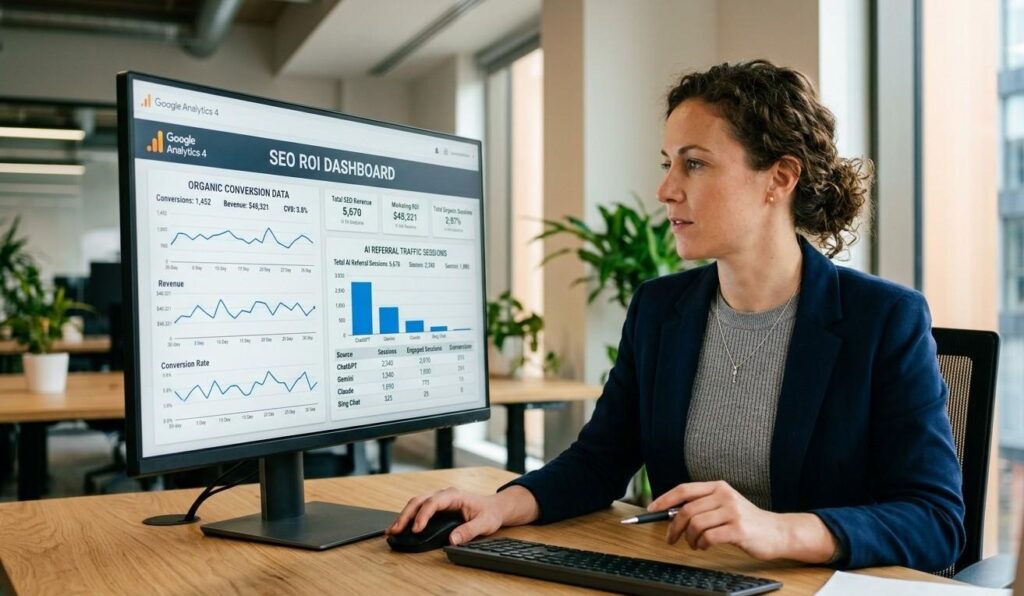
If your organic traffic dashboard shows a drop but your business is still winning leads from search, you’re not imagining things. The gap between clicks and actual SEO value is now one of the most common problems content teams face. How to measure SEO ROI became genuinely harder once AI Overviews arrived at scale and zero-click searches crossed 60% of all Google queries, according to SparkToro and Similarweb data from late 2024. The old playbook of tracking sessions and ranking positions doesn’t give you the full picture anymore. This post breaks down which metrics actually show ROI and which ones are pointing you in the wrong direction.
Why Organic Clicks Are No Longer a Reliable ROI Signal
Organic clicks are falling even when rankings hold steady, so treating them as your primary success metric makes a profitable SEO program look broken. The actual measure of SEO ROI in 2026 is downstream business value: qualified leads, assisted conversions and revenue traced to organic visibility, not session count.
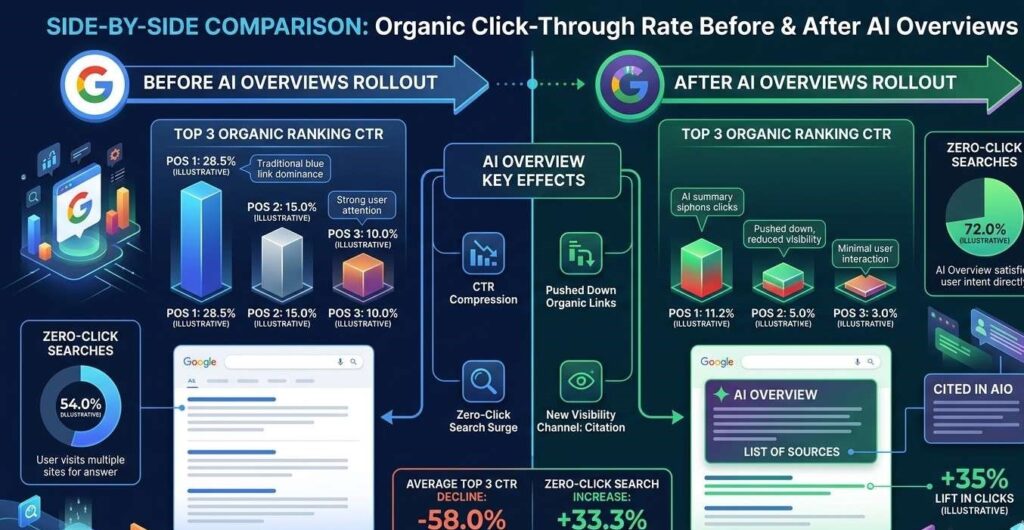
Ahrefs’ December 2025 research found that AI Overviews correlate with a 58% drop in CTR for the top-ranking page. That figure jumped from 34.5% in April 2025, so the trend is moving fast. ALM Corp’s 2026 search data analysis found that organic clicks in the US dropped from 44.2% of all searches in March 2024 to 40.3% by March 2025. More people are searching. Fewer are clicking through.
SEO is still working. The measurement model is what’s broken.
This shift is exactly why the content strategy I run for clients at wajahatamin.com now tracks revenue-adjacent signals rather than session totals as the primary proof of value.
The Five SEO KPIs That Actually Measure Business Value in 2026
In 2026, tracking SEO ROI requires five metrics: organic conversions in GA4, branded search volume in Google Search Console, AI referral sessions via a custom channel group, assisted conversion paths and impression share. These five replace the three-metric dashboard of sessions, rankings and bounce rate that most teams still use by default.
| KPI | Where to Find It | What It Shows |
| Organic conversions | GA4 > Traffic acquisition | Leads and revenue tied to organic sessions |
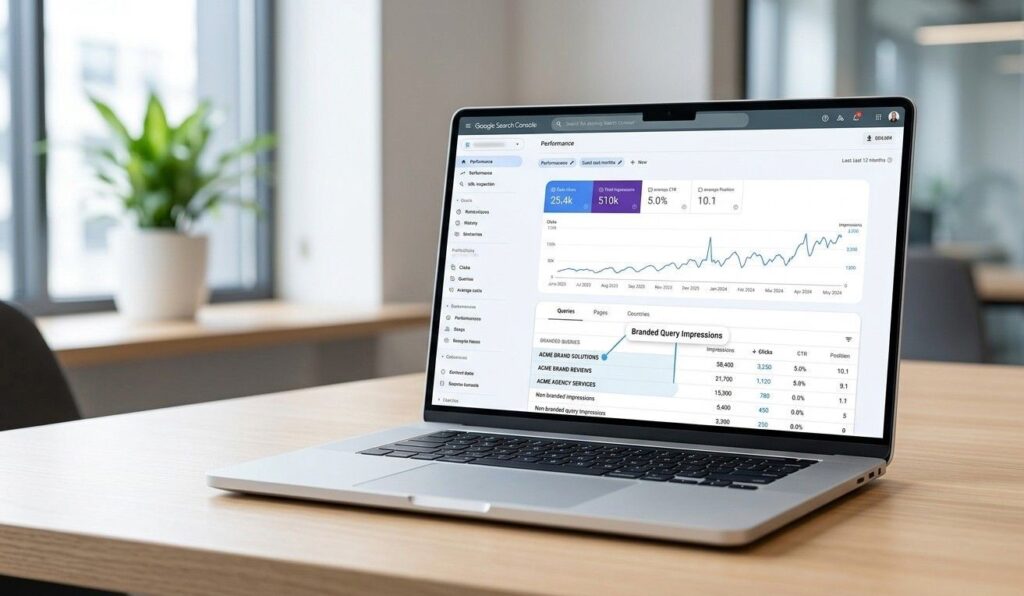
| Branded search volume | Search Console > Queries | Whether SEO is building recognizable brand awareness |
| AI referral sessions | GA4 custom channel group | Traffic from ChatGPT, Perplexity and Gemini |
| Assisted conversions | GA4 > Attribution > Paths | Organic’s role in multi-touch conversion paths |
| Impression share | Search Console > Performance | Organic reach regardless of click behavior |
Impression share is the most overlooked signal here. A post earning 40,000 monthly impressions at 1% CTR still reaches 40,000 searchers who see your brand name and page title. That exposure compounds into direct searches over time but shows up in your dashboard as a low-traffic page, which is misleading.
How to Track AI Referral Traffic in GA4 When It’s Hiding in Plain Sight
GA4 has no native AI channel, so visits from ChatGPT, Perplexity and Gemini land scattered across Referral, Direct and Unassigned by default. To measure this traffic correctly, you need a custom channel group built on a regex filter covering known AI domains. Without it, you’re missing a fast-growing segment of high-converting organic-adjacent traffic.
Setting Up the Custom Channel Group
Orbit Media’s GA4 tracking guide walks through the setup clearly: navigate to Admin > Data Display > Channel Groups, create a new channel and add conditions matching chatgpt.com, perplexity.ai, claude.ai and gemini.google.com. Drag the AI channel above the Referral channel so GA4 evaluates it first. Your Traffic Acquisition report will then show AI sessions as their own clean row.
From June 2025 onwards, ChatGPT desktop referrals also carry utm_source=chatgpt.com automatically. Perplexity consistently passes its referrer domain across desktop and mobile, so it’s the most trackable AI source without any workaround.
Why AI Traffic Conversion Quality Changes the ROI Story
This is where the measurement gets genuinely interesting. Onely’s 2025 research found AI search visitors convert 23 times better than traditional organic visitors. Similarweb’s 2025 Generative AI Report found AI platforms generated over 1.1 billion referral visits in June 2025, up 357% year-on-year. A Previsible study across 19 GA4 properties found AI-sourced sessions jumped 527% year-on-year between early 2024 and May 2025.
That conversion premium changes how you present SEO ROI when sessions are flat. For how to structure content so AI engines actually cite it, the generative engine optimization guide for content teams covers the specific structural decisions that raise citation probability.

How to Calculate SEO ROI Using Conversions and Assisted Revenue
Calculate SEO ROI by connecting GA4 organic conversion data to the revenue value of those conversions, then subtracting the cost of SEO investment. The formula: revenue from organic conversions minus total SEO cost, divided by total SEO cost, multiplied by 100. The gap most teams miss is assisted revenue, which organic generates but doesn’t claim in last-click reporting.
In GA4, go to Advertising > Attribution > Attribution Paths, change the primary dimension to Source and look for paths where organic appeared at touchpoint one or two before a conversion on a different channel. That pipeline belongs in your SEO ROI number even when organic didn’t close it directly.
The attribution model I outline on my SEO content writing services page uses this assisted logic specifically for B2B clients where sales cycles run 60 to 90 days. Organic often starts a path that closes through email or direct, and last-click models erase that contribution entirely.
What Branded Search Growth Reveals About SEO’s Long-Term ROI
Branded search volume growth is the most reliable leading indicator that SEO is compounding over time. When more people search your brand name directly, it shows that organic visibility is building recognition that converts later through direct or branded traffic, even when it doesn’t show up in organic session reports.
Track branded queries in Google Search Console under Performance > Queries, filter by your brand name and watch the trend over 12 months. Rising impressions and clicks on brand terms show SEO is building the kind of recall that survives algorithm updates. For a closer look at how content structure drives this kind of topical authority, the post on semantic SEO versus keyword density explains how on-page signals now operate in 2026.
Want to Measure SEO by Revenue Instead of Just Session Counts?
If your traffic dashboard shows a drop but you suspect organic is still driving real business value, the gap is worth closing with better attribution. I work with content teams and small businesses to build measurement systems that tie SEO directly to pipeline and not just click volume. If you want to understand what your SEO program is actually worth in 2026, start the conversation on my contact page and we’ll look at your current GA4 setup together.
FAQs
Are organic clicks still a useful SEO metric in 2026?
They’re still useful but no longer sufficient on their own. Ahrefs’ December 2025 research found AI Overviews correlate with a 58% lower CTR for top-ranking pages. A post can sit at position one and earn almost no clicks if an AI Overview fully answers the query above it. So track clicks alongside impressions, branded query growth and organic conversion rate. Clicks as a standalone KPI will consistently understate what SEO is actually doing for your business.
How do I track AI referral traffic from ChatGPT and Perplexity in GA4?
GA4 has no built-in AI channel, so you build a custom channel group. In Admin > Data Display > Channel Groups, add a new channel with a regex filter matching chatgpt.com, perplexity.ai, claude.ai and gemini.google.com. Drag the AI channel above Referral so GA4 classifies it first. ChatGPT desktop referrals carry utm_source=chatgpt.com from June 2025 onward. Perplexity consistently passes its domain as a referrer, making it your most reliably trackable AI source without extra configuration.
What counts as a conversion from SEO for ROI tracking purposes?
Any action with business value that started with an organic session counts as an SEO conversion. That includes form fills, phone calls, chat initiations, email signups, purchases and free trial starts. Set up conversion events in GA4 for each action, then filter Traffic Acquisition by Organic Search. Also check Attribution Paths because organic often appears as the first touch in a multi-step path that converts later through direct or email, and that assisted revenue belongs in your ROI calculation.
Should I still track keyword rankings or switch to something else?
Track rankings as a diagnostic tool, not a primary success KPI. A ranking shows where you sit in the queue but not whether that position produces impressions that convert. Pair rank data in Google Search Console with CTR trends and watch for positions where CTR is falling due to AI Overview expansion. Rankings still matter for diagnosing why a page stopped growing and for prioritizing content refreshes. They just shouldn’t be the number you present to stakeholders as proof that SEO is delivering business value.
How long does it take for SEO ROI to turn positive?
Most SEO programs break even between 12 and 18 months with consistent execution. The first six months show ranking movement without significant revenue. Months seven through twelve produce organic conversion growth as pages reach competitive positions. Months 13 through 24 deliver compounding returns as domain authority builds and existing pages hold positions. According to SeoProfy’s 2025 legal marketing report, SEO investments typically break even after 14 months, which aligns closely with what I observe across the content clients I work with.