
Keys Takeaway: Real estate agent marketing works best when your content answers the questions buyers search before they call anyone. According to NAR’s 2024 Profile of Home Buyers and Sellers, 43% of buyers started their search online while only 21% contacted an agent first. According to REsimpli’s 2025 marketing research, SEO brings 53% of total website traffic for real estate agents, and companies that blog generate 67% more leads than those that don’t. The 10 questions below cover the searches buyers run during their research phase. An agent whose website answers them earns trust before the first call ever happens.

Every buyer goes through a research window before choosing an agent. During that window, they Google questions about down payments, neighborhoods, market timing and the buying process itself. Real estate agent marketing that ignores this window loses those buyers to agents who publish content covering exactly those searches. The NAR’s 2024 data shows that 43% of buyers started online, compared to just 21% who contacted an agent first. That gap is your content opportunity. The agents whose websites show up during the research phase earn the trust that converts into a call weeks or months later.
Why Buyers Research Before They Call and What That Costs Agents Who Ignore It
Buyers spend weeks or months researching before reaching out to any agent, which means the agent who answers their questions in writing wins the trust battle before the relationship officially starts. Content that appears during this research phase doesn’t just bring traffic. It builds familiarity that makes yours the first name a buyer reaches for when they’re ready to move.
According to REsimpli’s 2025 marketing report, 96% of home buyers search online and SEO brings 53% of total website traffic for real estate agents. That’s more than any other single channel. Yet content marketing is only used by 23.1% of US agents, so the bar for standing out with written content is lower than most agents expect.
The strategy I use for real estate content clients at wajahatamin.com starts with the same question: what is a buyer Googling six months before they’re ready to make an offer? Build content around those searches and you’re already in the conversation before anyone else has introduced themselves.
The 10 Questions Buyers Google Before Choosing a Real Estate Agent
Each question below maps to a specific search query a buyer types during the research phase. Each one represents at least one page on your website.
- “How much down payment do I need to buy a house?” First-time buyers often don’t know that 3% to 5% down programs exist. An agent who answers this clearly and specifically becomes their first trusted resource.
- “What credit score is needed to buy a home?” Buyers worry about qualifying. A straightforward guide covering conventional, FHA and VA thresholds signals that you understand financing, not just listings.
- “Is now a good time to buy a house in [city]?” This is a market timing question with a local answer. Your perspective as someone who actually sells in that market carries more weight than any national headline.
- “How long does the home-buying process take?” Most buyers underestimate the timeline from pre-approval to closing. An honest guide that sets real expectations shows buyers you prepare your clients.
- “What are closing costs and how much should I budget?” This trips up nearly every first-time buyer. An agent who explains it in plain language ranks for a high-intent search and earns trust before any meeting.
- “Should I get pre-approved before looking at houses?” The answer is yes, but the reasoning matters more than the answer. A detailed explanation shows buyers you protect their time and credibility with sellers.
- “What should I look for when touring a home?” Buyers want a checklist. A downloadable or embedded guide on your website captures email addresses while proving your eye for detail.
- “How do I find a trustworthy real estate agent near me?” Buyers search this before calling anyone. A page that answers it honestly, with your credentials and verified client reviews, can rank locally for this query.
- “What are the best neighborhoods in [city] for families?” This is a local SEO opportunity most agents leave wide open. Neighborhood guides covering schools, walkability scores and commute data attract buyers who are already committed to your market.
- “How much does it cost to live in [city] versus [other city]?” Relocation buyers search cost-of-living comparisons months before they contact any agent. These posts earn backlinks and rank for people actively planning a move into your area.
How to Turn These Questions Into Realtor SEO Content That Actually Generates Leads
Not every question above needs a 2,000-word post. The format should match the complexity of the answer and the intent behind the search. Process questions work well as focused guides between 800 and 1,200 words. Local questions earn better results with longer, data-rich content that national portals can’t replicate.
Starting With Process and Financing Questions
Questions 1 through 7 are process questions with clear, answerable structures. Write one post per question, start with a direct answer in the first paragraph and expand with local context where possible. According to REsimpli’s lead generation research, companies that blog generate 67% more leads than those that don’t. Process content is where that lead flow starts because buyers bookmark these guides and return to the agent who published them when it’s time to act.
Gate your most detailed resources behind a short email capture form. A downloadable home-tour checklist or closing cost worksheet converts curious readers into contacts without any paid spend. According to ampifire’s 2026 real estate lead cost analysis, content marketing generates buyer leads at $7 to $90, compared to $53 to $66 per lead through Google search ads.
Going Local With Neighborhood and Relocation Content
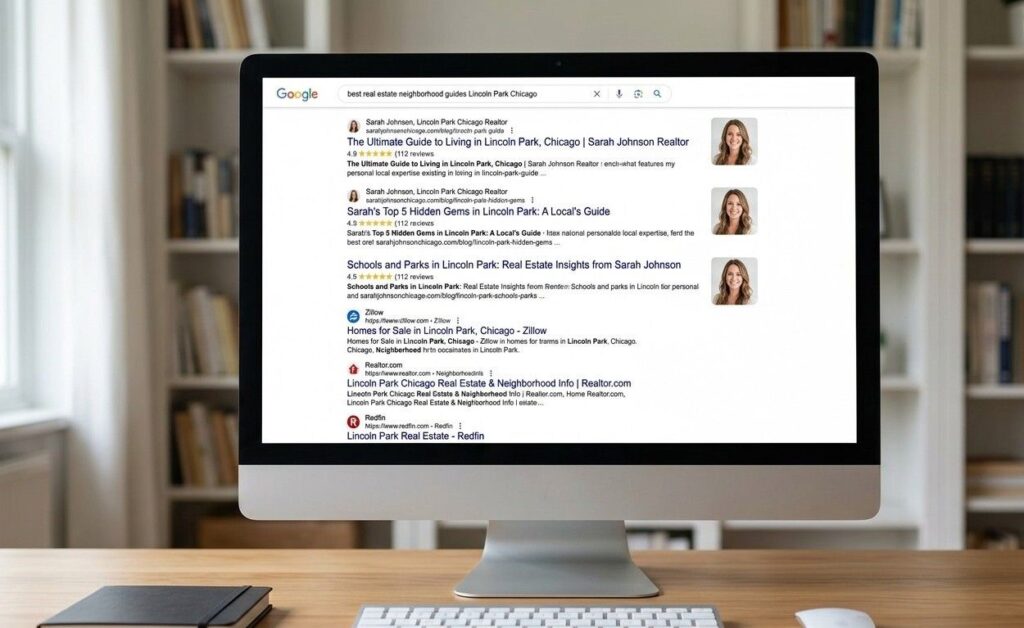
Questions 9 and 10 are local plays that most agents skip because they take more research time. That’s exactly why they’re worth prioritizing. A detailed neighborhood guide with school ratings, median prices from Zillow or Redfin, walkability scores and commute distances to local employers outranks anything a national portal publishes. Portals have listings. You have local knowledge and a first-person voice.
The strategy behind how agents beat portals with neighborhood pages applies here directly. A page written by someone who actively sells in that neighborhood, with real market data and genuine community insight, earns Google’s trust and buyer trust at the same time.

Should You Write Buyer Content or Seller Content First?
Write buyer content first if your real estate website has little or no existing traffic. Buyer questions are more frequent, more specific and faster to rank for because buyers outnumber sellers in your market at any given time and because their questions follow clear, answerable patterns.
Seller content matters, but it competes more on brand recognition, which new websites don’t yet carry. Questions like “What is my home worth?” drive high intent but require an established local reputation to convert well.
The content brief process I use for every blog post always starts by mapping the search intent before writing a single word. For real estate, buyer intent is the cleaner starting point. Seller guides and market update content layer in naturally once buyer posts establish your domain’s topical authority.
The city-specific landing page strategy that complements buyer blog content is where local ranking compounds over six to twelve months. Both belong in your real estate agent marketing plan, but buyer questions come first.
For agents who want to know what their content should actually cover, my SEO content writing services page outlines the process I use for real estate clients across different market types and budget ranges.
Ready to Show Up When Buyers Are Still Deciding Who to Call?
The 10 questions above are typed into Google in your market every single week. A real estate website that answers them with clear, local content captures buyers at the moment they’re forming their first impressions of which agent to trust. If you want help building that content without spending your weekends writing, reach out through my contact page and we’ll look at which questions make the most sense for your market and your goals.
FAQs
What should a real estate agent blog about in 2026?
Start with the questions buyers Google before calling any agent: down payment requirements, credit score thresholds, closing cost breakdowns and home-buying timelines. Each is a distinct post targeting a distinct search query. Then add local content, including neighborhood guides, school district comparisons and market updates specific to your area. Posts answering specific buyer questions rank more easily than generic “tips for homebuyers” articles, which tend to compete against high-authority national platforms you can’t out-spend.
How often should realtors publish blog content?
One well-researched post per week builds topical authority over 12 months without burnout. If weekly publishing isn’t realistic, two solid posts per month still outperforms the majority of agent websites, since only 23.1% of US agents use content marketing at all. Consistency matters more than volume. A post that answers a real buyer question and stays updated outperforms five rushed posts with no search intent behind them. Pick a pace you can actually hold and stick to it.
Do buyer guides actually generate real estate leads?
Yes, but the conversion is indirect. A buyer guide ranks for a research-phase search, earns a bookmark or email capture and builds trust before any call happens. According to ListingHub’s 2026 lead generation research, 43% of buyers hired the first agent they contacted. When your guide is the first credible answer a buyer finds, you become the first agent they call. That’s the conversion that matters.
Should I write seller content or buyer content first on my website?
Start with buyer content. Buyers actively research online months before committing to any agent, so buyer guides earn traffic earlier in the funnel. The NAR’s 2024 data confirms that 43% of buyers started their search online before contacting any agent. Seller content competes more on brand recognition, which new websites don’t yet have. Build buyer content first, grow your organic visibility and then add seller guides once your site has an established audience and domain authority worth targeting against.
Can video replace blogs for realtors in 2026?
Video and blogs serve different intents, so neither replaces the other. A neighborhood walkthrough on YouTube ranks for visual searches and builds your personality. A text-based neighborhood guide with school ratings and median home prices ranks for informational queries in Google. According to REsimpli’s 2025 research, listings with video get 403% more inquiries, but that applies to property listings, not to research-phase buyer questions. Buyers three months from a decision search for written answers. Use both over time, but use blogs to own the research phase where your future clients are right now.