
Quick Answer
Restaurants fill slow nights in 2026 with five moves: a Google Business Profile built for AI search, direct ordering that protects margin, review volume that survives a bomb, geo-fenced ads timed to real hunger windows and an email or SMS list built from guest data the restaurant already owns. The three tactics that waste budget are generic social posting with no distribution plan, deep discounting through third-party apps and one-time print runs. The National Restaurant Association found 60% of operators reported softer traffic in 2025, which is why the split between these two lists now decides who survives a slow Tuesday.
- Restaurants appear in Google’s local 3-pack 35.9% of the time, but only 1.2% to 11% of the time across ChatGPT, Gemini and Perplexity combined, according to Search Engine Land’s 2026 Local Visibility Index.
- The National Restaurant Association reported that 42% of operators said their restaurant was not profitable in 2025, with rising food, labor and insurance costs as the leading stressor.
- US online food delivery revenue is projected to reach $473.49 billion in 2026, according to Statista, and most of that volume still moves through commission-charging platforms.
- Direct ordering and review volume protect the margin third-party apps were built to take, while discount-driven app promotions tend to attract one-time bargain hunters instead of repeat guests.
- Google’s structured data documentation confirms that Restaurant schema is what makes a listing eligible for richer search and Maps results in the first place.
Running content strategy at Adnnel for restaurant clients across the US and Canada has shown a pattern that repeats in nearly every slow-night audit. The owner is spending on things that feel like marketing while skipping the things that move covers. A Tuesday at 6pm does not fill itself, and the restaurants that solved it did not spend more money. They spent on different things. This post breaks down the five moves that consistently work in 2026 and the three that keep eating budget without filling a single table.
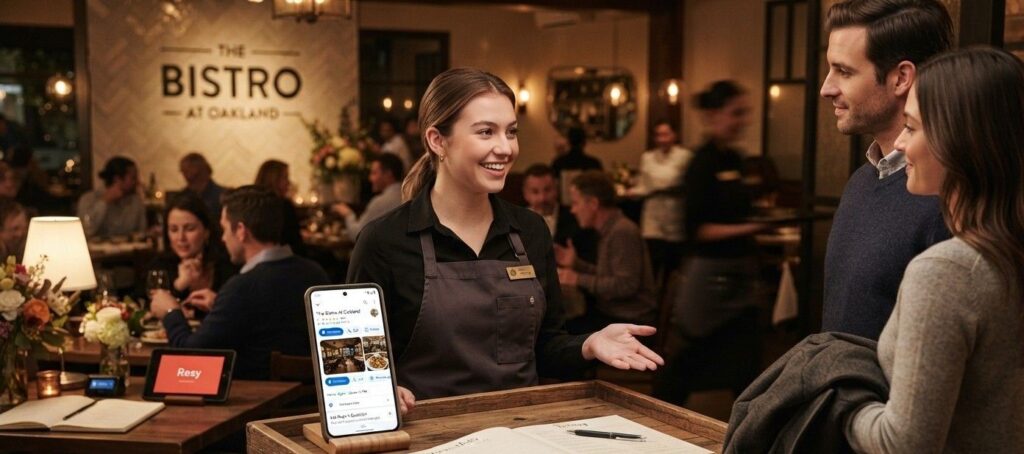
Why Slow Nights Are a Marketing Problem, Not a Bad-Luck Problem
A slow Tuesday is rarely about the food, the weather or the neighborhood. It is almost always a visibility and retention problem that builds quietly until the numbers force a conversation. The National Restaurant Association’s 2026 State of the Restaurant Industry report found that 60% of operators experienced softer customer traffic in 2025, and more than 9 in 10 cited food, labor and other rising costs as significant pressure on margin.
That combination, softer traffic alongside higher costs, means the restaurants pulling ahead are not the ones spending the most on marketing. They are the ones spending on channels that still convert. A restaurant relying on walk-in traffic and one Instagram post a week has no defense when a competitor three blocks away rebuilds their Google Business Profile and starts showing up in searches the old restaurant never sees. The gap is not talent or food quality. It comes down to which five things get budget and which three keep getting it out of habit, an issue our guide to neighborhood-level local SEO for restaurants covers in more depth.
The Five Moves That Fill Tables in 2026
Five categories consistently move covers in 2026, and they share one trait: each builds an asset the restaurant owns instead of renting visibility from a platform that takes a cut. Independents that invest here see steadier Tuesday and Wednesday traffic within 60 to 90 days, not overnight, but the pattern is consistent across most concepts.
1. A Google Business Profile Built for Ask Maps and AI Search
Google’s AI-powered local results, often called Ask Maps, now answer natural language queries like “best ramen in Brooklyn for two on Friday night” with a single recommended restaurant instead of a list of ten. Search Engine Land’s 2026 Local Visibility Index found that restaurants and other local businesses still appear in Google’s traditional local 3-pack 35.9% of the time, but the same brands are recommended by ChatGPT in only 1.2% of cases, by Gemini in 11% and by Perplexity in 7.4%. That gap means a profile built for 2019’s local pack is largely invisible to the AI layer customers increasingly search through first.
The fix is occasion language, atmosphere descriptors, specific dish names and dietary tags written directly into the profile, paired with Restaurant schema markup so search engines can parse the details rather than guess at them. A complete walkthrough of which fields matter most lives in our Google Business Profile optimization guide for 2026.
2. Direct Ordering and Reservation Systems That Keep the Margin
Third-party delivery commissions run 15% to 30% on paper and closer to 30% to 40% in practice once promotions, processing fees and refunds are included. At the same time, US online food delivery revenue is projected to climb past $470 billion in 2026, so the volume is real even when the margin on it is thin. A restaurant that moves repeat customers from a delivery app onto its own ordering page keeps roughly 97% of each order instead of 60% to 70%, without losing the app entirely as a discovery channel for new diners.
This is one of the few changes that pays for itself inside a single quarter. In a 2026 audit for an Adnnel restaurant client doing roughly $18,000 a month in third-party orders, shifting 35% of repeat volume to direct ordering recovered close to $4,000 in monthly margin within the first 90 days, without raising prices or cutting portions. Wajahat covers how this fits into a broader pricing and conversion strategy in Adnnel’s restaurant marketing services.
3. Review Volume and Response as a Defense System
A single coordinated review bomb can drop a restaurant’s average by nearly two full stars in under a day, which is enough to fall out of the local 3-pack for the busiest weekend of the month. The defense is volume, not vigilance. A restaurant sitting on 400 honest reviews barely moves when ten fake ones land, while a restaurant with 40 reviews can be wrecked by the same attack. Automated post-meal review requests, same-day responses and real-time rating alerts turn this into a system that runs quietly in the background instead of a once-a-month chore.
4. Geo-Fenced Local Ads Timed to Real Hunger Windows
Generic local ads running all day waste budget on people who are not hungry yet. Geo-fenced campaigns that target a three-mile radius at specific moments, office workers at 5pm on a Wednesday, date-night searchers at 8pm Friday, brunch browsers on a Sunday morning, convert at a meaningfully higher rate because the timing matches intent rather than proximity alone.
5. Email and SMS Lists Built From Guest Data the Restaurant Already Owns
Most restaurants have a few hundred to a few thousand past guests sitting in their point-of-sale system who have never received a single marketing message. Birthday offers, “we miss you” winbacks around the 90-day mark and early access to new menu items for top spenders are some of the cheapest revenue a restaurant will ever generate, because the audience already knows the food. The acquisition cost is zero. The only cost is setting the automation up once, and the kind of menu-level personalization that makes these messages convert is covered in our piece on restaurant menu SEO.
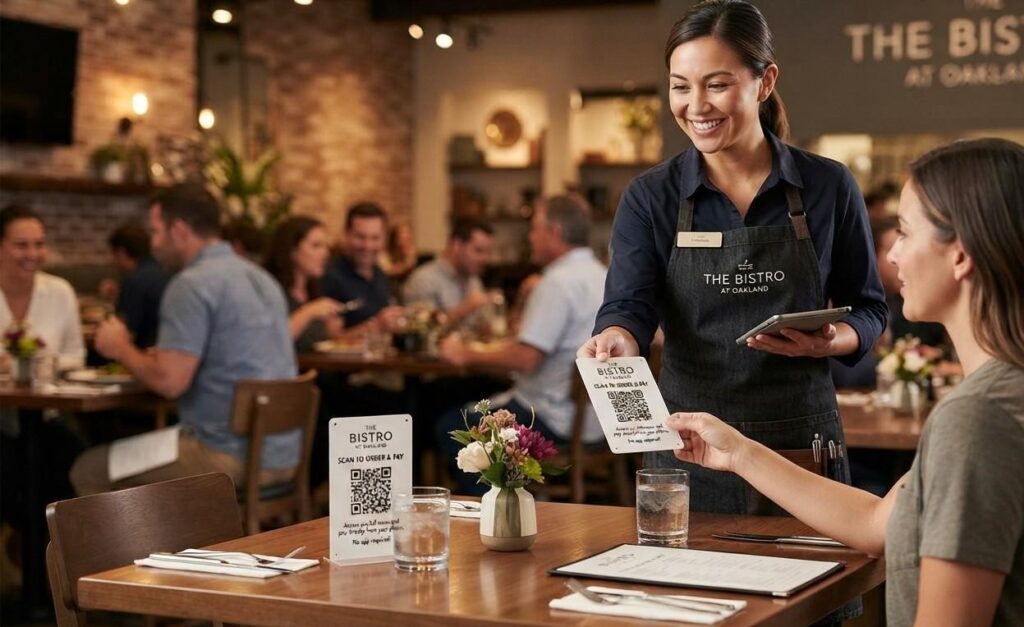
The Three Tactics Restaurants Keep Funding That Do Not Move Covers
These three categories are not worthless in every context, but they consistently underperform when measured against the five above, and they are where most struggling restaurants are still spending.
Generic Social Media Posting Without a Distribution Plan
Posting a plate of food to Instagram three times a week with no boosting, no hashtag strategy tied to local search and no connection to the Google Business Profile rarely produces bookings. The content is not the problem. The missing distribution plan is. A single short clip shot on a phone during prep and posted with intention outperforms a week of unplanned posts, because consistency and targeting drive results, not post volume.
Heavy Discounting Through Third-Party Apps
Deep percentage-off promotions inside delivery apps mostly attract bargain hunters who churn the moment the discount ends, while the restaurant absorbs both the discount and the platform commission on the same order. It is among the most expensive ways to acquire a customer who was never going to return at full price.
One-Time Print Ads and Local Flyers
A single print run in a community newspaper or a flyer drop has no retargeting, no data capture and no way to measure which household walked in because of it. The spend disappears the moment the print run ends, with no asset left behind to build on for the next campaign.
How to Tell Which Category a Tactic Falls Into Before You Spend
The test is simple. Ask whether the tactic builds something the restaurant still owns after the campaign ends, a list, a review base, a ranking, a piece of schema markup, or whether the spend disappears the moment the campaign stops. The five moves above all pass that test. The three that do not all fail it.
| Tactic | Builds a Lasting Asset | Typical Payback Window |
| Google Business Profile for AI search | Yes, ranking compounds over time | 60 to 90 days |
| Direct ordering migration | Yes, owned customer data and margin | 1 to 3 months |
| Review volume and response system | Yes, review base protects future rankings | Ongoing, compounds monthly |
| Geo-fenced local ads | Partial, targeting data improves over time | Weeks |
| Email and SMS automation | Yes, list is a permanent owned asset | Immediate to 30 days |
| Generic social posting | No, content has no distribution layer | None measurable |
| Third-party app discounting | No, customer relationship stays with the app | None, often negative |
| One-time print or flyers | No, no data or retargeting captured | None measurable |
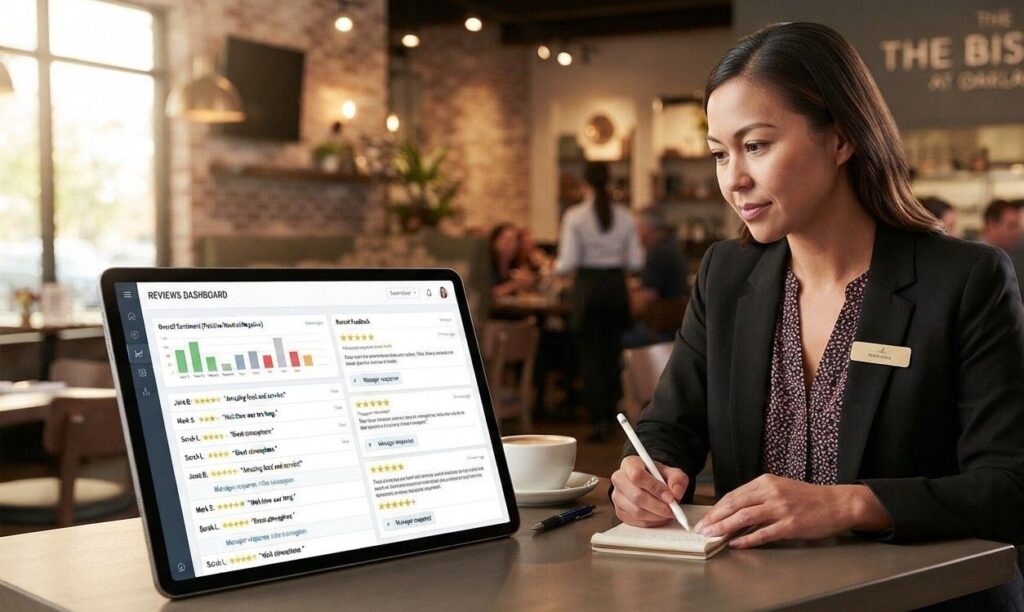
Stop Guessing What Fills Your Slow Nights
A slow Tuesday is fixable once marketing spend goes toward channels that build something permanent instead of renting attention for a week. Adnnel’s restaurant marketing audit and service breakdown covers Google Business Profile completeness, third-party delivery cost and review armor before recommending a single dollar of spend. For a direct conversation about where your restaurant’s slow nights are coming from, reach out through the contact page and Wajahat will walk through the audit results with you, the same way he breaks down search and content strategy across his broader SEO and marketing strategy work.
Frequently Asked Questions
What is the fastest way to fill a slow Tuesday or Wednesday night?
Email and SMS automation to past guests is usually fastest, since the audience already exists in the point-of-sale system. A “we miss you” offer sent to guests who have not visited in 60 to 90 days can show results within a single send cycle, while Google Business Profile and review improvements take 60 to 90 days to compound.
Does posting more on social media bring in customers?
Volume alone rarely does. What works is consistency paired with a distribution plan, meaning the post connects to local search, gets boosted to a geo-targeted audience or ties into a specific promotion. Three unplanned posts a week perform worse than one planned post tied to a clear call to action.
Should a restaurant leave third-party delivery apps entirely?
No. The apps still work well for new-customer discovery. The shift that protects margin is moving repeat orders to a direct ordering channel while keeping the apps running for first-time customers who are still browsing for options.
How does Google’s AI Mode change what restaurants need to do for local search?
AI Mode returns one or two recommended restaurants instead of a list of ten, which means a Google Business Profile needs occasion, atmosphere, dish and dietary language that natural-language queries can match against, not only a category and an address.
What is the real cost of a review bomb and how long does recovery take?
A coordinated attack can drop a rating nearly two full stars within hours, which can knock a restaurant out of the local 3-pack for the following weekend. Recovery speed depends on review volume going in. A restaurant with several hundred honest reviews recovers its average within days once new genuine reviews outweigh the attack, while a thin review base can take months.