
TL;DR: Local SEO for restaurants in 2026 means ranking in Google’s map pack, getting cited in AI-generated answers and showing up when someone asks ChatGPT or Perplexity where to eat. According to Semrush’s 2025 data, Google AI Overviews appear on 88 percent of informational queries. Only 38 percent of those AI citations come from top-10 organic results, per Ahrefs’ AI Overview study. Your Google Business Profile, menu page structure and review velocity are the three variables that move the needle fastest. Get those right and the rest follows.
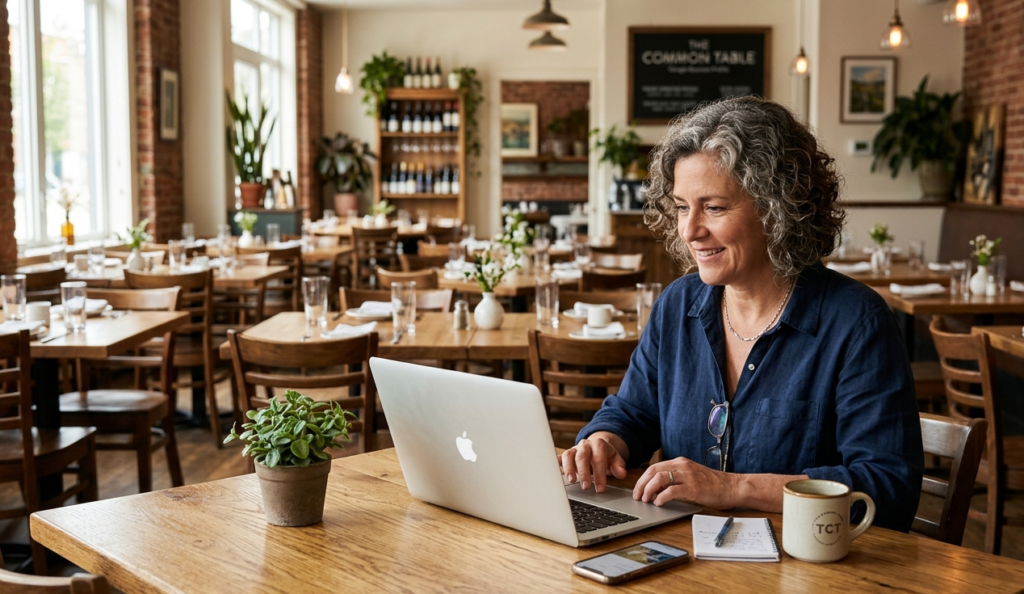
Your restaurant could be fully booked every Friday. But if a tourist asks ChatGPT for the best Italian place nearby and your name never appears, that table stays empty. Local restaurant search has split into two channels: traditional Google results and AI-generated recommendations. Most restaurants only optimise for the first one. This guide covers both, because in 2026, visibility in AI answers is not a bonus. It is a core part of how new customers find you for the first time.
Why Local SEO for Restaurants Is Different from Standard SEO
Restaurant local search operates on tighter geography, faster buying intent and a heavier dependence on third-party signals than most other business types. A user searching “pasta near me” wants to visit within hours, not weeks. That changes what Google prioritises.
Google’s local algorithm weighs three factors above all others: proximity, relevance and prominence. Proximity is fixed. But relevance and prominence are things you can build. Relevance comes from your Google Business Profile category, your menu content and your website copy. Prominence comes from reviews, citations and backlinks from local sources.
The map pack still drives the most clicks
For restaurant queries, the Google map pack (the three-result local block) captures more clicks than any organic result below it. Appearing in that block requires a fully completed Google Business Profile, consistent NAP (name, address, phone number) across directories and a steady flow of recent reviews.
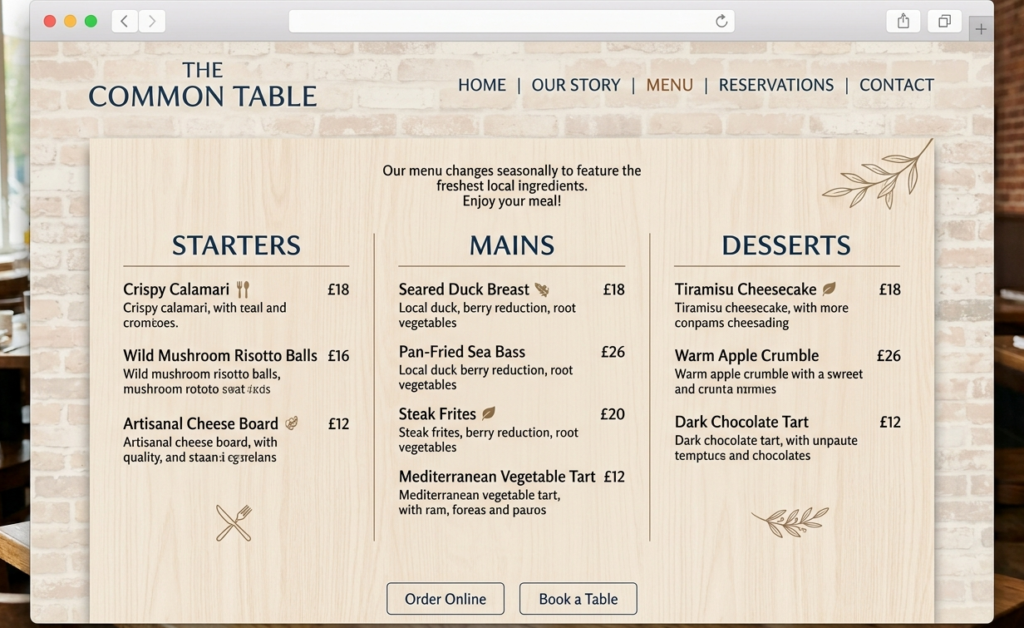
How to Optimise Your Google Business Profile for Restaurants
Your Google Business Profile is the single highest-impact asset for restaurant local search. A complete, regularly updated profile outperforms a slow-loading website every time for map pack rankings.
Google’s own guidance on Business Profiles confirms that completeness directly affects search rankings. That means every field matters: primary and secondary categories, business hours, menu link, photos, posts and Q&A responses.
The fields most restaurants leave blank
- Services: List specific cuisine types and dietary options (vegan, halal, gluten-free)
- Attributes: Add “dine-in”, “takeaway”, “reservations accepted” and “outdoor seating”
- Menu: Link to your HTML menu page, not a PDF (more on this below)
- Photos: Upload new food and interior photos at least twice a month
- Posts: Publish a Google Post each week covering specials, events or seasonal items
According to BrightLocal’s 2024 Local Consumer Review Survey, 98 percent of consumers read online reviews for local businesses. Restaurants with over 50 reviews and an average rating above 4.2 appear in the map pack 3x more often than those with under 20 reviews.
Should Your Restaurant Menu Be HTML or PDF?
Use an HTML menu page on your website. Google cannot crawl a PDF the way it crawls a web page. So a PDF menu gives you zero keyword benefit, zero rich result eligibility and no structured data potential.
An HTML menu lets Google index dish names, ingredients and dietary labels as indexable content. For example, if someone searches “restaurants with gluten-free pasta in Manchester,” a well-structured HTML menu page can surface that specific dish. A PDF cannot.
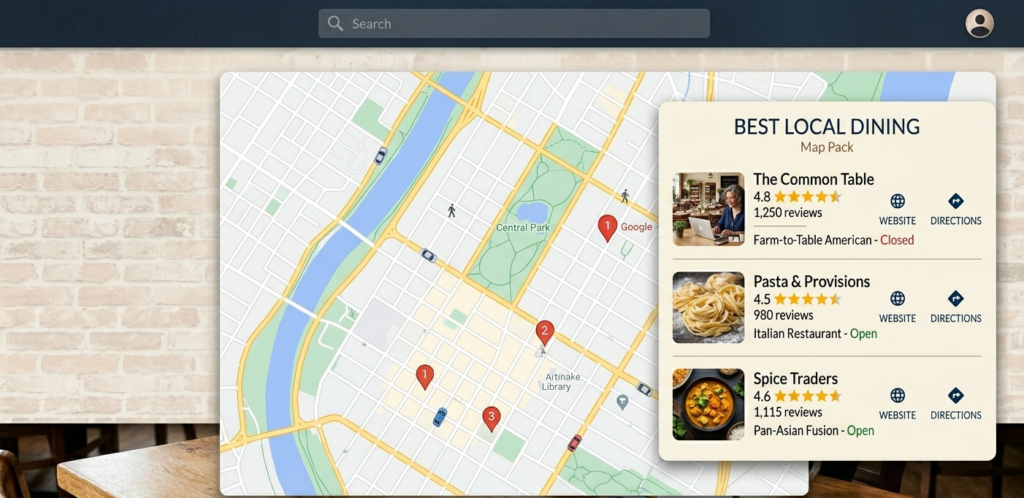
How to structure your menu page for SEO
- Use H2 headings for each menu section (Starters, Mains, Desserts)
- Include dish names in H3 tags with a brief description underneath
- Add Restaurant schema markup to your menu page so Google can extract structured data
- Keep the page URL simple:
/menu/or/our-menu/
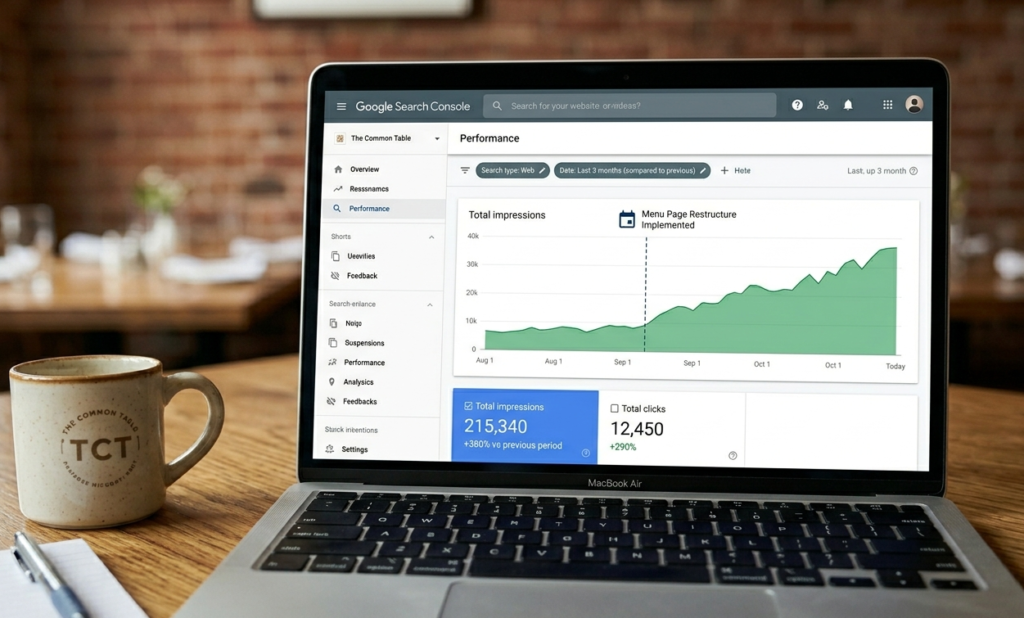
I apply this structure when writing restaurant web content through my SEO content writing services. The difference in impressions between a PDF-based menu and a structured HTML page is visible in Google Search Console within 30 to 60 days.
How Reviews Affect Restaurant SEO Rankings
Reviews are both a ranking factor and a citation trigger for AI answer engines. A restaurant with 200 recent, specific reviews is far more likely to appear in a ChatGPT or Perplexity recommendation than one with 40 generic ones.
Specific reviews, where a customer names a dish or describes an experience, act as natural keyword-rich content. Google and AI engines treat them as third-party signals of relevance. So the goal is not just to collect reviews. It is to prompt customers to write useful ones.
How to get more specific reviews
Ask at the right moment. A server saying “If you enjoyed the lamb shank tonight, a quick Google review mentioning it really helps us” produces better reviews than a generic QR code at checkout. According to BrightLocal’s 2024 survey, 70 percent of consumers will leave a review if asked directly.
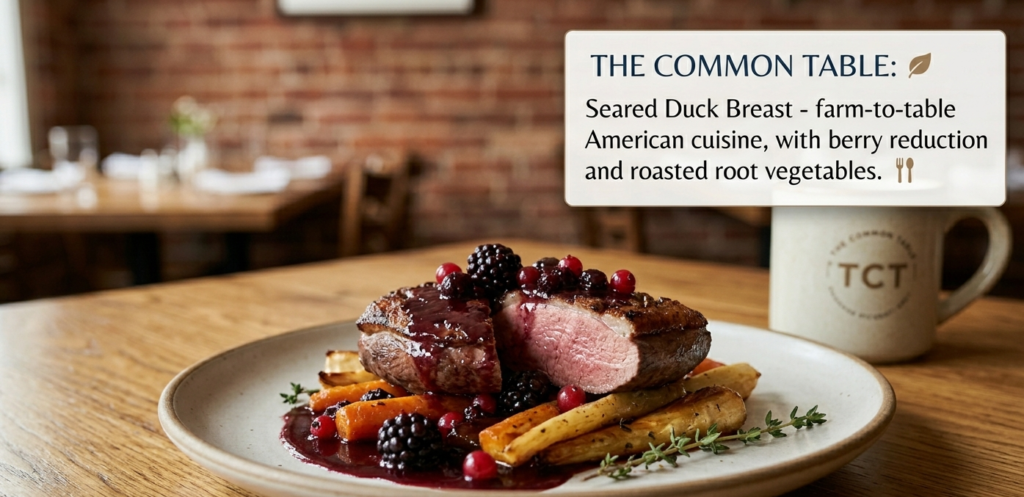
How to Rank a Restaurant on Google with Local Content
Beyond your Google Business Profile, local content on your website builds the topical authority that separates page-one restaurants from page-three ones.
A restaurant website that only has a home page, menu and contact form has almost no content for Google to index. Adding location-specific pages, blog posts about seasonal ingredients or neighbourhood guides builds the kind of topical depth that helps with both rankings and AI citations.
| Content type | SEO benefit | AI citation benefit |
| HTML menu page | High: indexes dish names and dietary info | Medium: structured data helps |
| Neighbourhood guide | Medium: local keyword relevance | High: reference-style content |
| Chef/sourcing story | Low: brand signal | High: entity and trust signal |
| Event pages | Medium: fresh content signal | Low |
| FAQ page | High: featured snippet and AEO | High: direct answer format |
According to Princeton’s 2025 research cited by Search Engine Journal, adding named sources and statistics to content lifts AI visibility by over 40 percent. A restaurant blog post naming your suppliers, your neighbourhood and your head chef by name builds exactly that kind of entity density.
My blog on AI search and GEO covers this entity strategy in more depth for businesses that want to appear in AI-generated answers, not just organic results.
Is Yelp Still Worth Optimising in 2026?
Yes, but not for the reasons it was in 2015. Yelp still drives direct traffic and its pages rank well for restaurant queries in some US markets. But its bigger value in 2026 is as a citation source for AI engines.
Perplexity pulls about 47 percent of its citations from community and editorial sources, per the system prompt data referenced in this site’s SEO and GEO overview. Yelp, TripAdvisor and OpenTable all fall into that category. A complete, photo-rich Yelp profile with recent reviews improves your chance of appearing in Perplexity’s restaurant recommendations, even if you never actively pursue Yelp rankings.
Ready to Fill More Tables?
Local SEO for restaurants is not complicated, but it does require consistency. A complete Google Business Profile, an HTML menu page built for search and a real plan for generating specific reviews will outperform most of your competitors this year. If you want someone to build or audit that system for you, take a look at my restaurant and local SEO services or get in touch directly. I am happy to tell you what your listing needs in a single honest conversation.
FAQs
How long does it take for a restaurant to rank on Google?
For map pack results, a fully optimised Google Business Profile with consistent NAP citations and 20 or more recent reviews typically shows movement within 60 to 90 days. Organic website rankings for competitive city-level terms take longer, usually 4 to 6 months. Local neighbourhood queries are faster because competition is lower. The quickest wins come from completing your Business Profile and fixing NAP inconsistencies first, as these changes reflect in local rankings within weeks.
Should my restaurant website use an HTML menu or a PDF?
Always use an HTML menu page. Google cannot crawl a PDF the way it reads a web page, so a PDF menu contributes zero keyword value. An HTML menu lets Google index dish names, ingredients and dietary labels, all of which match real search queries. Add Restaurant schema markup to the page and structure each section with proper H2 and H3 headings. This setup also makes your menu readable on mobile without the pinch-to-zoom frustration of a PDF.
Is Yelp still worth optimising in 2026?
Yes. Yelp pages rank independently in Google for restaurant queries, especially in US cities. Beyond that, AI engines like Perplexity pull citations from community and editorial sources, and Yelp qualifies as one of them. A complete Yelp profile with recent photos, updated hours and a steady review stream improves your visibility in AI-generated restaurant recommendations. It takes about two hours to fully optimise a Yelp listing, so the return on time is high relative to other channels.
How do I respond to negative restaurant reviews?
Respond within 24 hours, keep it calm and stay off the defensive. Acknowledge the specific issue the customer raised, apologise for the experience without making excuses and invite them back. Never argue publicly. According to BrightLocal’s 2024 survey, 89 percent of consumers read business responses to reviews. A well-handled negative review signals to potential customers that you take service seriously. Keep responses under 100 words and avoid copy-paste templates, as Google surfaces response patterns in Business Profile insights.
What should I post on my restaurant Google Business Profile each week?
Post one update per week at minimum. Rotate between four content types: a dish or seasonal special with a high-quality photo, an upcoming event or booking opportunity, a behind-the-scenes moment (a new supplier, a team story) and a direct response to a common question customers ask. Google Posts expire after seven days for some categories, so consistency matters. Posts that include a specific call to action like “book a table for Saturday” or “available this weekend” drive more profile engagement than purely descriptive posts.