
Keys Takeaway: SaaS SEO works best when it targets decision-stage searches that large incumbents ignore: comparison queries, alternative pages, integration landing pages and use-case content. According to Position Digital’s 2026 SaaS marketing research, 57% of B2B decision makers begin product research on search engines, and 83% self-research before speaking to any sales rep. Organic channels cost 40% less than paid and convert 110% better. According to First Page Sage data compiled by Linkquest, SaaS companies see a 702% ROI from SEO with a breakeven point around seven months. A SaaS content strategy built on conversion-intent keywords compounds faster and costs less than one built on awareness-stage blog posts.

Most SaaS founders I speak to describe the same frustration. They publish blog posts targeting broad industry keywords, watch HubSpot, Intercom or Monday.com dominate page one and wonder why their content investment isn’t producing pipeline. The problem isn’t execution. It’s keyword selection. SaaS SEO against established players requires a different approach: one built around the searches your competitors overlook, the product comparisons buyers run before signing up and the integration queries your tool already answers better than anyone else. This post covers exactly that territory.
Why Most SaaS Keyword Strategies Fail Against Established Players
Most SaaS keyword strategies fail against established players because they target awareness-stage terms with high difficulty scores that large tools already dominate. A startup with a Domain Rating of 30 cannot realistically rank above HubSpot for “CRM software.” The traffic opportunity instead sits in decision-stage and product-specific searches where buyers are already evaluating options and the incumbents have thinner content coverage.
According to Samurai Links research cited by Linkquest, the average SaaS site carries a Domain Rating of 62.6. Enterprise tools like Salesforce, Atlassian and Intercom sit well above that figure. So competing head-on for “project management software” when your DR is 28 isn’t a strategy. It’s a budget drain with a predictable outcome.
The correct approach is to map your keyword universe by funnel stage and competitive difficulty at the same time. Awareness keywords like “what is CRM” attract high volumes but serve readers who are nowhere near a purchase decision. Consideration and decision keywords like “Pipedrive vs HubSpot for small teams” or “Slack alternatives for remote agencies” carry lower search volumes but far higher purchase intent, and they’re the searches larger competitors rarely optimize for.
According to Position Digital’s 2026 research, 40% of software buyers spend several weeks or months researching before committing to a purchase. That research phase is exactly your window. The comparison and alternative searches happening during those weeks are where smaller SaaS companies find ground the incumbents leave wide open.
The keyword briefing process I follow for B2B content clients at wajahatamin.com always separates awareness plays from conversion plays before writing begins. Without that separation, most SaaS blogs spend months building traffic that never reaches the sales team.
What Keyword Types Shift Rankings and Drive SaaS Pipeline?
The keyword types that drive both rankings and pipeline for SaaS companies are: alternative searches (“YourTool alternatives”), comparison searches (“YourTool vs Competitor”), integration searches (“YourTool + Slack”), use-case landing pages (“CRM for construction companies”) and pricing keywords. These categories target buyers in the final research stage and face significantly lower competition than broad category terms.
Alternative and Comparison Pages: High Intent, Lower Competition
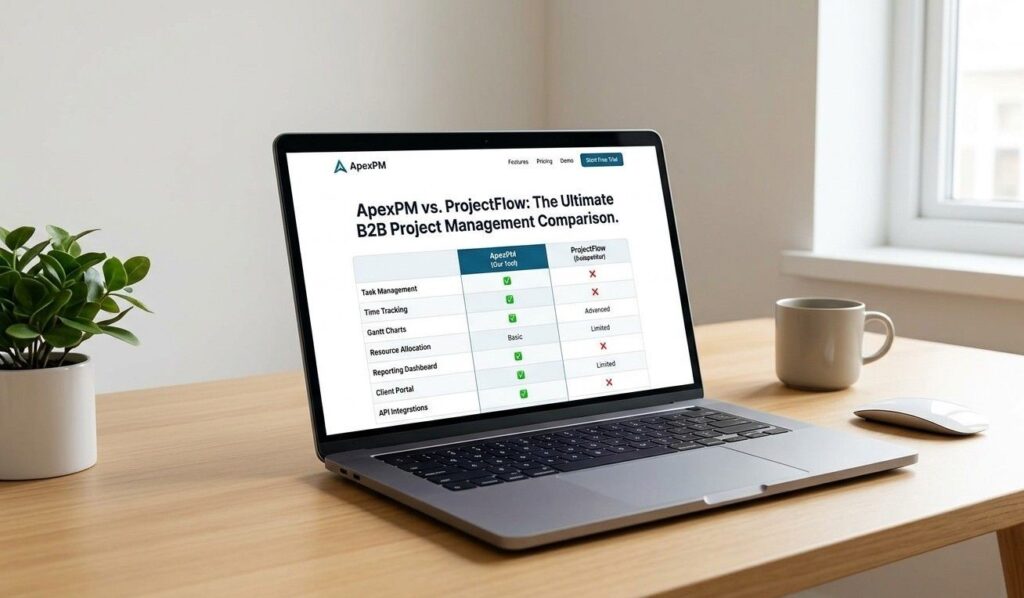
“[Tool] alternatives” and “[Tool A] vs [Tool B]” searches attract buyers who have already decided to switch or evaluate software options. According to a 2024 survey by Intergrowth covering 100+ marketers, 35.8% reported their comparison pages performed better than ever and only 15.1% saw any decline. Honest comparison pages with real feature tables earn natural backlinks from review sites, forums and industry blogs without requiring outreach.
OwlClaw’s 2025 SaaS SEO benchmarks show comparison and alternative pages convert at 8 to 15% for SaaS, compared to 2 to 5% for standard blog content. That conversion premium means even 200 monthly visits to a “YourTool vs Competitor” page generates meaningful pipeline. The structure that converts best pairs a feature comparison table with use-case framing organized around specific business problems rather than product attributes.
Integration and Use-Case Pages: Underused Traffic Channels
Integration pages target high-intent users who already use a tool your product connects with. Someone searching “project management software that integrates with Xero” has a specific context and strong intent. According to OwlClaw’s 2025 benchmarks, SaaS companies with 50 or more integration pages often receive 20 to 30% of their total organic traffic from those integration searches. Each page is a separate SEO asset targeting a distinct audience.
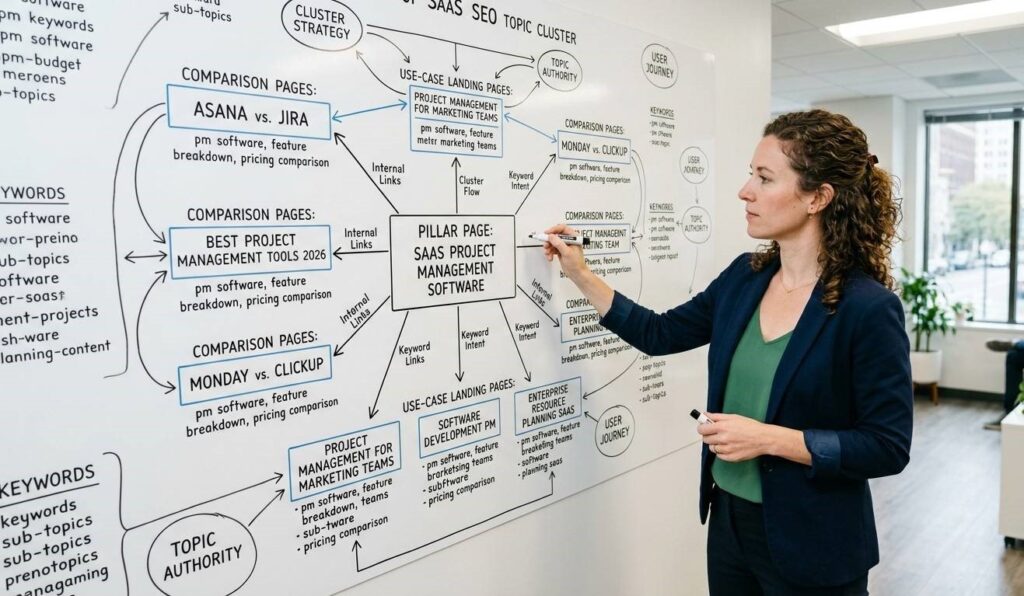
Use-case pages work the same way. “CRM for real estate agents” and “CRM for construction firms” each draw a subset of buyers who share a specific workflow. These pages face less competition, rank faster and convert better because the copy addresses a recognizable situation. The semantic SEO topic cluster model applies directly here: each use-case page strengthens topical authority while targeting a distinct buyer segment.
Should SaaS Companies Publish Pricing Pages and Let Them Rank?
Yes. Pricing pages should rank for “[Tool] pricing” and “[Tool] cost” searches because those queries attract buyers who have already shortlisted your product and want to evaluate cost before requesting a demo. If you don’t own that search impression, a G2 or Capterra profile ranks instead and frames your pricing in a context you don’t control.
According to Position Digital’s 2026 research, B2B SaaS buyers start their research by checking price. If the price is outside their budget, they stop evaluating before ever reading another page. A ranking pricing page also pre-qualifies visitors, which shortens sales cycles and reduces low-quality demo requests.
Pricing pages rank best when they target three keyword variants: your tool name plus “pricing,” your tool name plus “cost” and your tool name plus “plans.” Adding a structured FAQ section below the pricing table, covering questions sales teams and G2 reviewers field most often, improves both organic rankings and AI Overview citation probability. The GEO guide for content teams covers why structured, factual pages like pricing and comparison content are among the most frequently cited in AI-generated answers.
How Backlinks Actually Work in SaaS SEO Against Bigger Competitors
Backlinks still matter in SaaS SEO, but the source type matters more than raw volume. Review platform profiles on G2, Capterra and Trustpilot contribute directly to domain authority and AI citation probability. According to SE Ranking’s November 2025 data, SaaS sites with profiles on Trustpilot, G2 and Capterra are 3x more likely to be cited by ChatGPT than those without any presence on these platforms.
Case studies and original research are the two content types that earn editorial links most reliably. According to the Content Marketing Institute via Linkquest’s 2026 SaaS SEO statistics report, 62% of technology marketers said case studies produced the best link building results in 2025, while research reports came second at 53%.
According to ALMcorp’s SaaS SEO strategy analysis, companies with strong SEO programs generate two times more revenue from organic search than from other sources combined. Getting there requires building authority through a mix of editorial links, review platform presence and structured product content. No single tactic drives it alone.
The broader AI citation picture matters for B2B SaaS in 2026 too. According to SE Ranking’s November 2025 data, sites with 32,000 or more referring domains are 3.5x more likely to be cited by ChatGPT than those with under 200. The SEO vs AEO vs GEO framework explains how to optimize for AI citation even before your domain authority reaches competitive levels.
The content and link strategy I build for SaaS clients on my SEO content writing services page covers all three link-earning paths: original research for editorial links, comparison content for review platform context and integration pages for partner marketplace discoverability.
Ready to Build a SaaS SEO Strategy That Competes at Every Funnel Stage?
Ranking against tools with five times your domain authority takes a different keyword map, not more blog posts on the same topics. If you want a content strategy built around the searches that actually close pipeline, get in touch through my contact page and we’ll look at your current keyword coverage against your top three competitors. The gaps are usually more specific and more winnable than they first appear.
Frequently Asked Questions
What keywords should a SaaS startup target first in its SEO strategy?
Target comparison, alternative and integration keywords before broad category terms. These decision-stage searches face lower competition and attract buyers who are actively evaluating options. Start by listing your five closest competitors, then find their “alternatives” and “vs” keyword variants in Ahrefs or Semrush. Build one dedicated page per high-volume variant. Then add use-case landing pages for your two or three most common customer types. Awareness content can come later once your domain authority builds.
How many blog posts does SaaS SEO actually need to drive results?
Volume matters less than intent coverage. A site with 20 well-targeted comparison, alternative and use-case pages will typically outperform one with 200 general awareness posts competing for the same high-difficulty category terms. According to OwlClaw’s 2025 SaaS benchmarks, comparison and alternative pages convert at 8 to 15%, while standard blog posts average 2 to 5%. Fewer targeted pages built around decision-stage intent outperform high-volume unfocused publishing at every stage of the funnel.
Should SaaS companies publish their pricing page publicly for SEO?
Yes, always. Pricing pages that rank for “[Tool] pricing” searches attract buyers who have already shortlisted your product. According to Position Digital’s 2026 SaaS research, buyers start their research with price. If your pricing page doesn’t rank, a G2 or Capterra profile ranks instead and frames your cost on their terms. Publishing a structured pricing page with a FAQ section targeting common cost questions gives you control over that search impression and pre-qualifies leads before they request a demo.
How important are backlinks for SaaS SEO when you’re competing against big tools?
Backlinks are still one of the strongest ranking signals, but source quality matters as much as volume. Review profiles on G2, Capterra and Trustpilot build domain authority and lift AI citation rates directly. According to SE Ranking’s November 2025 study, SaaS sites with those profiles are 3x more likely to be cited by ChatGPT. Case studies and original research earn the editorial links that move your domain rating over time, but review platform presence is the fastest structural gain for early-stage products.
Do SaaS comparison pages actually convert or just bring in informational browsers?
Comparison pages are among the highest-converting pages in SaaS content, not just traffic drivers. According to OwlClaw’s 2025 SaaS SEO benchmarks, visitors landing on comparison and alternative pages convert at 8 to 15%, significantly above the 2 to 5% average for blog content. An Intergrowth survey from 2024 found 35.8% of marketers reported comparison pages performing better than ever. Problem-framed comparisons organized around specific workflows convert better than feature-list comparisons because they match how buyers actually make decisions.