
Keys Takeaways: Personal injury lawyer SEO is the most competitive category in legal search. The keyword “car accident lawyer” draws 90,500 monthly US searches at $150 to $250 per click (On The Map Marketing, 2026). Because organic SEO delivers a 7.5% conversion rate compared to PPC’s 2.2% (First Page Sage, 2024), firms that rank organically sign cases without paying per click. High-intent keyword targeting, dedicated case-type pages and local SEO are the three factors separating page-one firms from those permanently stuck on page three. The average personal injury settlement runs approximately $55,000, which explains why firms invest so aggressively to earn and hold those rankings.

Most PI firms I talk to describe the same problem. They’re running Google Ads at $150 to $250 per click, converting a fraction of what those costs demand and wondering whether organic ever pays off. It does, but only when the keyword strategy is built around actual buying intent. Personal injury lawyer SEO isn’t about publishing general legal content and hoping traffic shows up. It’s about knowing which terms signal that someone is ready to call, then building pages that match those searches precisely enough to earn page-one placement. The approach I apply to legal clients at wajahatamin.com starts with intent mapping before anything else.
Why Personal Injury SEO Costs More Than Any Other Legal Niche
Personal injury SEO costs more because the cases pay more. A single signed case generates an average settlement of approximately $55,000, which drives firms to bid $150 to $250 per click in paid search. That economic pressure flows directly into organic competition, where PI firms invest more than almost any other practice area to avoid those recurring ad costs over the long term.
According to On The Map Marketing’s 2026 keyword research, “personal injury lawyer” draws 110,000 monthly US searches at an estimated $100 to $200 per click. “Car accident lawyer” pulls 90,500 searches at $150 to $250. Truck accident terms can exceed $500 per click in major metro markets.
Organic search is the exit ramp from that treadmill. First Page Sage’s 2024 CPL analysis found law firm SEO delivers a 7.5% conversion rate, more than three times higher than the 2.2% PPC average. According to SeoProfy’s 2025 legal marketing report, organic search also drives 52.6% of total website traffic for law firms, while paid search stops producing leads the moment spending stops.
The timeline is real. SeoProfy’s data shows SEO investments typically break even after 14 months before compounding returns begin. Firms that treat organic search as infrastructure rather than a quick fix are the ones still benefiting from it three years later. Firms rotating through agencies looking for faster results rarely find them.
How to Build a High-Intent Keyword Strategy for Your PI Firm
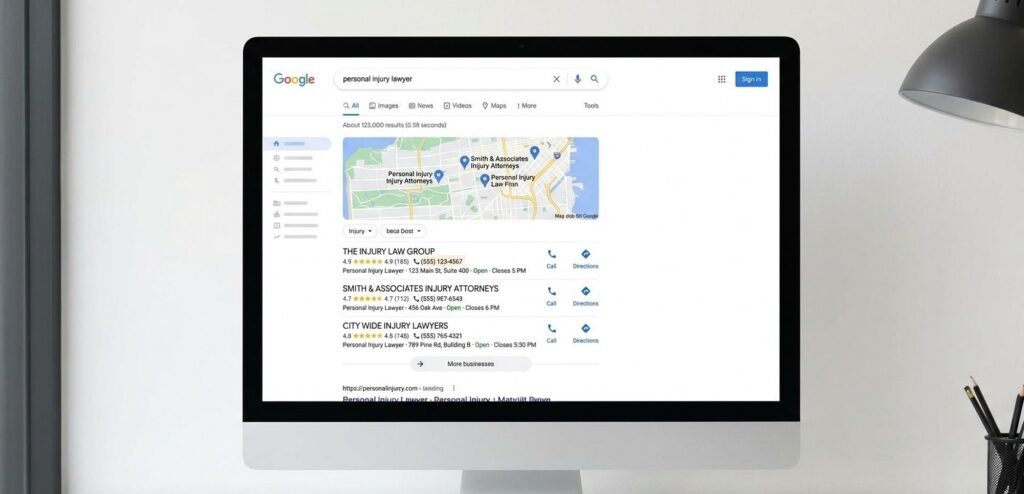
The highest-intent PI keywords combine a specific case type with a specific location. “Phoenix bicycle accident attorney” converts better than “Phoenix personal injury lawyer” because it matches exactly what the searcher experienced. Long-tail, case-specific searches draw fewer people, but those people are already in hiring mode, which makes every visit more valuable than a broad-term click.
Here’s a quick view of the top transactional PI keywords by monthly US search volume, based on 2026 data from On The Map Marketing:
| Keyword | Monthly Searches | Est. CPC |
| personal injury lawyer | 110,000 | $100–$200 |
| car accident lawyer | 90,500 | $150–$250 |
| personal injury lawyer near me | 49,500 | $120–$200 |
| medical malpractice lawyer | 22,200 | $80–$160 |
| wrongful death lawyer | 18,100 | $90–$170 |
| truck accident lawyer | 14,800 | $100–$180 |
| slip and fall lawyer | 8,100 | $70–$130 |
| Uber accident lawyer | 4,400 | varies |
| nursing home abuse lawyer | 3,600 | varies |
Transactional Keywords: What People Search When They’re Ready to Call
“Personal injury lawyer near me” pulls 49,500 monthly searches. Someone typing “near me” isn’t researching. They’re ready to hire. Each of the high-volume terms in the table above needs its own dedicated page. A single practice areas overview cannot rank for multiple distinct search intents, so trying to cover all of them in one place means ranking for none of them well.
The same topic-specificity logic that builds authority in PI content applies across legal niches. I cover the structural reasoning in detail in why most attorney websites stay stuck on page two.
Case-Specific Long-Tail Keywords That Close the Intent Gap
More specific terms like “Uber accident lawyer” (4,400 monthly searches) and “nursing home abuse lawyer” (3,600) carry lower volume but higher intent because the searcher already knows what happened to them. Competition is lower on these terms, so smaller firms often reach page one faster here than on broad head terms. The structure that works best pairs one competitive anchor keyword with 10 to 15 case-specific pages, each targeting a distinct search.
This is also why topic clusters outperform keyword-dense pages in 2026. For a deeper look at that shift, the semantic SEO versus keyword density breakdown covers how PI content hierarchies should now be structured.
How Many Case-Specific Pages Does Your PI Site Actually Need?
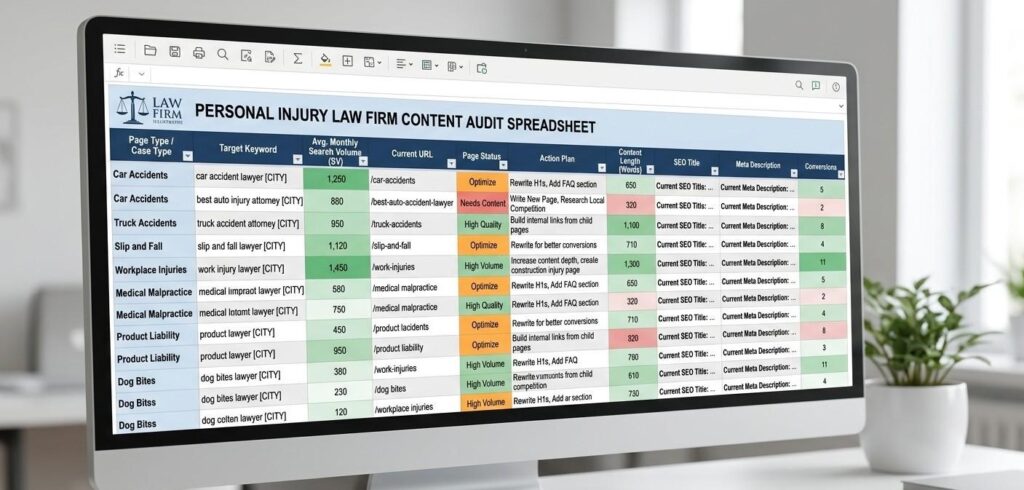
A personal injury website needs one dedicated page per case type handled, plus one page per primary service area. A firm handling car accidents, truck accidents, slip and falls and wrongful death in three cities needs at least 12 to 16 pages targeting specific case-plus-location keyword combinations.
A generic “personal injury practice areas” page that lists every case type in a few paragraphs cannot rank well for any individual search. Each case type has its own searcher vocabulary, injury patterns and legal context. A page dedicated to truck accident claims covers federal trucking regulations, electronic logging device data and carrier liability in ways that a general injuries page simply can’t.
Location pages follow the same rule. A firm serving Dallas, Plano and Frisco benefits from a dedicated page for each city rather than one “serving the DFW area” statement. Those pages need real local signals: courthouse names, specific intersection data and any documented case context in that area. Without genuine local specifics, Google treats them as thin content and they don’t rank.
For law firms thinking about how AI engines now evaluate case-specific legal pages, the AEO strategy for law firms explains the structural changes affecting which pages get cited by ChatGPT and Perplexity in 2026.
How Smaller PI Firms Beat Bigger Firms in Local Search
Smaller PI firms win local search by going narrower, not broader. A solo practitioner who owns the local pack for “bicycle accident lawyer Austin” doesn’t need to compete with large national firms for “personal injury lawyer Texas.” Tighter geography and more specific case types are where smaller firms find ground that big operations leave uncovered.
According to BrightLocal’s 2024 data, PI attorneys with 50 or more Google reviews appear in the local map pack 3.4 times more often than firms with fewer than 10. A system that brings in 5 new genuine client reviews per month reaches 60 reviews in a year, which is a defensible competitive advantage in most mid-size markets.
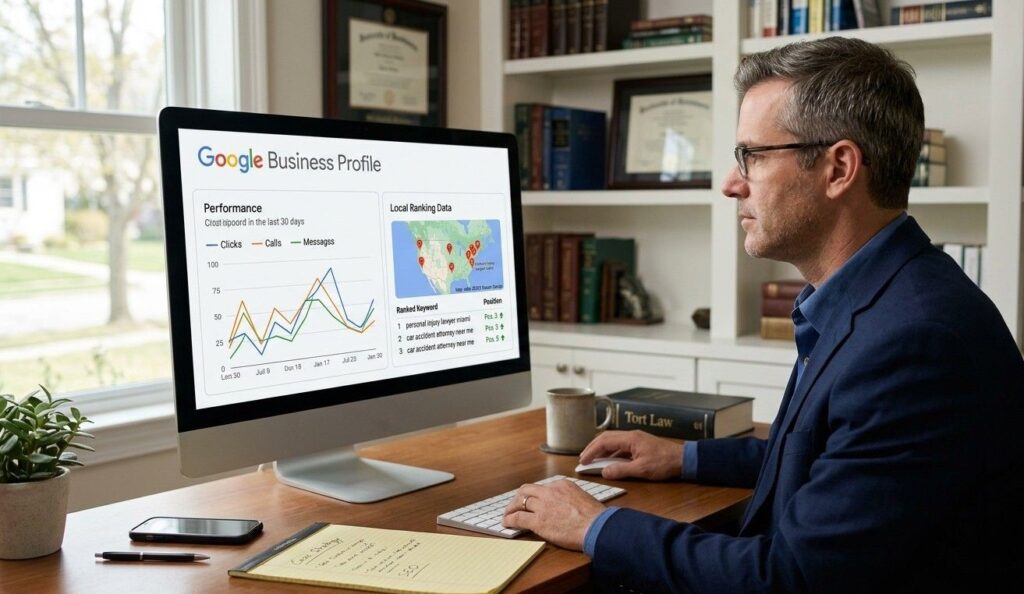
Two technical factors support local pack rankings beyond review count. First, a complete Google Business Profile with every service area and case type listed, plus a description that includes your primary keyword and city name. Second, NAP consistency: your firm name, address and phone number must match exactly across Google Business Profile, Avvo, FindLaw and Justia. Inconsistent NAP data suppresses local rankings quietly, and most firms only catch it after running a citation audit.
The local content strategy I build for legal clients, which I outline on my SEO content writing services page, treats citation auditing as the first step before any content work begins.
Want a Personal Injury SEO Strategy Built for Cases, Not Just Rankings?
PI law is a niche where the wrong keywords, thin content and a weak local presence cost you signed cases every month. If you’re ready to build an organic strategy that reduces your dependence on paid search, reach out through my contact page and we’ll look at where your current site stands against the competition in your market. No pressure. Just a clear look at what the keyword opportunity actually looks like for your firm.
FAQs
Why is personal injury SEO so expensive?
PI SEO costs more because the cases are worth more. Average personal injury settlements run around $55,000, so firms bid aggressively to appear for searches that lead to signed cases. According to SeoProfy’s 2025 legal marketing report, law firms typically spend $60,000 to $114,000 annually on SEO, with competitive PI practices often investing more. That figure reflects the economic reality: one organic ranking for “car accident lawyer” can pay for the entire year of content investment.
How many case-specific pages do I need?
You need one dedicated page per case type you handle and one per primary city you serve. A firm covering five injury types across three cities needs at least 15 pages targeting specific case-plus-location combinations. Mixing all your practice areas onto one page prevents any of them from ranking because a single URL cannot match multiple distinct search intents simultaneously. Start with your highest-revenue case types and build location pages from there.
Can I target “best personal injury lawyer” as a keyword?
You can target it, but you need to check your state bar’s advertising rules first. The ABA’s Model Rule 7.1, adopted by most states, prohibits false or misleading communications about legal services. Superlative claims like “best” trigger bar scrutiny in many jurisdictions unless the claim is backed by third-party recognition such as awards or bar-certified ratings. According to rankings.io’s law firm compliance guide, any unsubstantiated superlative can create advertising rule exposure, so verify before optimizing.
How do I compete with the big PI firms in my city?
Go narrower on both geography and case type. Large firms dominate broad terms like “Houston personal injury lawyer.” But a firm with genuine experience in rideshare accidents or construction site injuries can own specific searches in specific neighborhoods where the big firms aren’t focused. BrightLocal’s 2024 data shows firms with 50 or more Google reviews appear in the map pack 3.4 times more often than those with under 10, so a steady review acquisition system is the fastest structural advantage a smaller firm can build.
Do testimonials and case results need disclaimers on a PI website?
Yes, in most states. ABA Model Rule 7.1 prohibits misleading communications about legal services, and state bars across Florida, New York, California and Nebraska specifically require disclaimers alongside testimonials and case results. According to Justia’s legal advertising guide, the standard disclaimer states that past results are no guarantee of future outcomes. California’s Rule 1-400 requires that disclaimer for testimonials specifically. Review your state bar’s current rules before publishing any results or client reviews.