
Keys Takeaways: Google Business Profile optimization in 2026 comes down to four core actions: choosing the right primary category, completing your profile fully, generating consistent reviews and posting regularly. According to Whitespark’s 2026 Local Search Ranking Factors survey, primary GBP category is the #1 local pack ranking signal, scoring 193 out of 200. Birdeye’s 2025 State of Google Business Profile report found that verified, complete profiles are 80% more likely to appear in search results and generate 4 times more website visits than incomplete ones. Reviews now account for 20% of local pack ranking signals, up from 16% in 2023, per BrightLocal’s 2026 Local Search Ranking Factors survey.
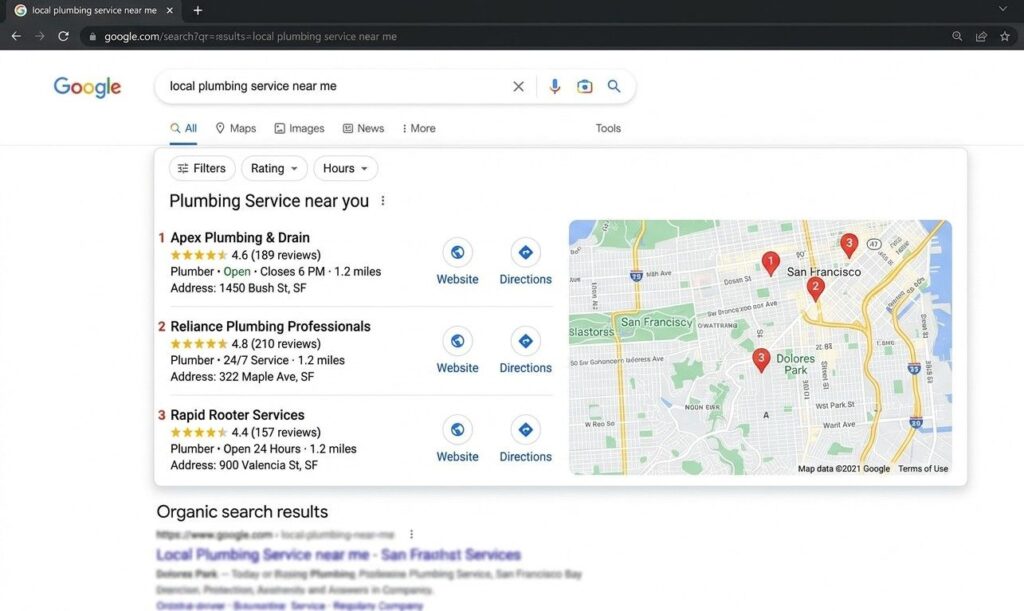
If your Google Business Profile sits untouched since you first claimed it, there’s a real chance you’re invisible to customers searching for your services right now. The Google local 3-pack, that map box above organic results, captures 42% of all clicks from local searches, according to Seoprofy. But most local businesses have no clear idea which signals control whether they appear there. Google Business Profile optimization has shifted significantly over the past two years. This guide covers what actually moves the needle in 2026, backed by real survey data and zero guesswork.
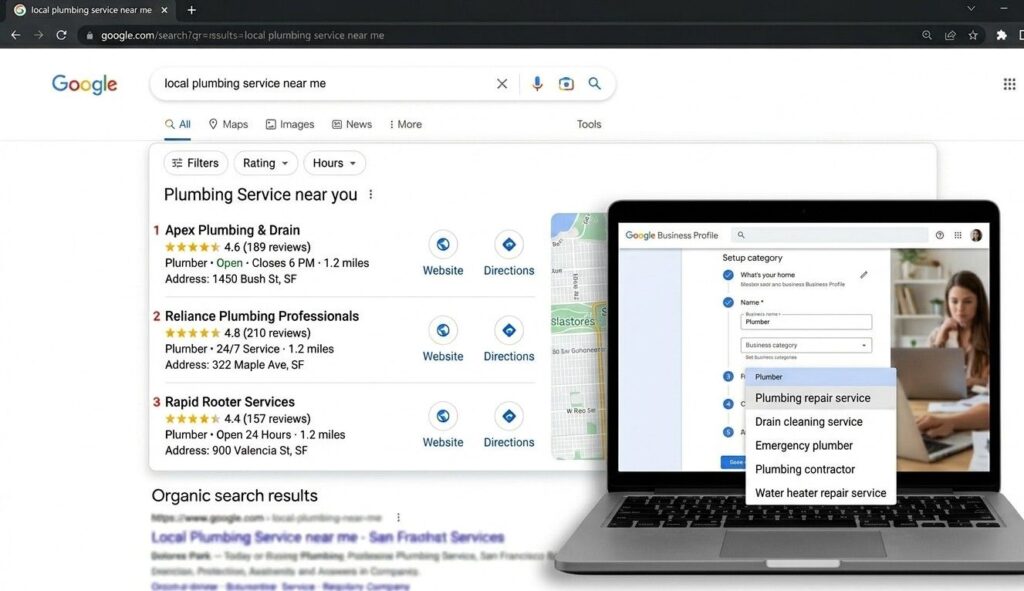
Primary Category Selection: The Core of Google Business Profile Optimization
According to Whitespark’s 2026 Local Search Ranking Factors survey, primary GBP category selection scored 193 out of 200, making it the single most influential local pack ranking signal. Choosing the wrong primary category is also the top negative ranking factor, scoring 176. Because of that, this is the first field you fix before touching anything else on your profile.
The mistake most business owners make is choosing something broad when a more specific option exists. If you run a personal injury law firm, “Personal Injury Attorney” will outperform “Law Firm” in local pack results. A dentist focused on cosmetic work gets more targeted traffic with “Cosmetic Dentist” than with “Dentist.”
Secondary categories add supporting relevance. A restaurant might list “Italian Restaurant” as primary, then add “Pizza Restaurant” and “Catering Food and Drink Supplier” as secondaries if those services genuinely exist. But the primary category does the heavy lifting, so get that one right first.
One thing to avoid: adding keywords to your business name. According to Google’s official GBP guidelines, your listing name must match your real-world business name exactly. Adding phrases like “best plumber in Austin” violates those guidelines, and Google can suspend your profile for it.
Which GBP Signals Actually Drive Local Pack Rankings?
GBP signals are the dominant force in local pack rankings, and several have shifted since 2023. BrightLocal’s 2026 Local Search Ranking Factors survey tracks these categories each year, and the table below shows where each signal stands today.
| Ranking Signal | Status in 2026 | Source |
| Primary GBP category | #1 overall factor (score: 193) | Whitespark, 2026 |
| Review signals | 20% of local pack rankings, up from 16% in 2023 | BrightLocal, 2026 |
| On-page website signals | Slightly down from 2023 levels | BrightLocal, 2026 |
| Profile completeness | 80% more likely to rank when verified and complete | Birdeye, 2025 |
| Photo freshness | 30–50% more profile views with recent uploads | WebFX, 2026 |
| NAP consistency | Foundational trust signal across directories | Multiple sources |
Google measures local rankings through three pillars: relevance, distance and prominence. Your GBP directly controls relevance and feeds into prominence through reviews, links and citations. Distance is the one variable you can’t change, but every other factor is within your control.
The website your GBP links to also matters. A thin or off-topic page signals to Google that your business isn’t what your profile claims. I go into this in detail in my post on why your city-specific landing pages aren’t ranking.
These principles hold across industries, though the competitive thresholds differ. From working with service businesses, therapists and specialty niches through wajahatamin.com, the pattern is consistent: get the GBP fundamentals right and the rest of your local SEO work becomes significantly more effective.
Do Google Business Profile Posts Help Your Rankings?
GBP posts don’t carry heavy direct ranking weight, but they show Google that your business is active and engaged. According to SOCi data, Google Posts average a 1.44% click-through rate, which is higher than most display and social ad benchmarks. Profiles with recent posts receive 21% more user interactions than inactive ones, per SQ Magazine’s 2025 analysis.
Those interactions, including clicks, website visits and direction requests triggered by a post, feed into behavioral signals that do influence rankings. So while a single post won’t move you from position 5 to position 1, a consistent posting habit builds engagement data that compounds over time.
According to WebFX’s 2026 GBP benchmarks, event and offer posts perform 2 times better than standard updates in terms of engagement. If you’re only posting general business news, shift toward posts with a clear offer, a specific date or a deadline. Aim for at least one post per week and track which formats get the most clicks.
How Reviews Work as a Google Business Profile Ranking Factor
Reviews now make up 20% of local pack ranking signals, up from 16% in 2023, per BrightLocal’s 2026 survey. Localo’s analysis of 2 million Google Business Profiles found that businesses in positions 1-3 average around 250 reviews, while those ranked 11-20 average around 150. Consistent, recent reviews carry more weight than a one-time burst of activity from a single campaign.
How to Ask for Reviews Without Violating Google’s Guidelines
Google prohibits incentivized reviews, so no discounts or gifts in exchange for a rating. The most effective approach is a direct ask within 24 hours of a completed job or appointment, sent by text or email with a link straight to your GBP review form.
According to Birdeye’s 2025 GBP study, each new review a business receives correlates with roughly 80 additional website visits, 63 direction requests and 16 calls per year. That return makes consistent review generation one of the most effective local SEO activities you can run. Sterling Sky’s 2025 case study also confirmed that crossing the 10-review threshold produces a measurable ranking bump, even as additional reviews beyond that point show diminishing ranking returns.
What to Do When a Negative Review Lands
A negative review is less damaging than one that goes unanswered. According to ReviewTrackers, 53% of customers expect a response to a negative review within a week. And according to LocaliQ, 97% of review readers also read how the business responded. A calm, specific reply shows future customers that you take service seriously.
Don’t argue in public, don’t paste in a template and don’t apologize for something that didn’t happen. Address the specific issue, offer to continue the conversation offline and keep your response under 100 words. That’s the whole playbook.
For healthcare and therapy businesses, review management sits at the center of local strategy. I cover the ethical and practical side in my local SEO playbook for therapists.

What Photos Do for Your GBP Visibility
According to Birdeye’s 2025 GBP report, profiles with photos consistently receive more website visits, direction requests and calls than photo-free listings. WebFX’s 2026 GBP benchmarks show photo-rich profiles get 30–50% more views, and businesses with 10 or more photos often see double the engagement. Recent uploads outperform a static library that hasn’t changed in years, because freshness matters to Google’s activity signals.
Upload photos consistently rather than all at once. Real images from your actual location, your team and your current work outperform stock imagery every time. For restaurants, current in-house food shots beat generic menu images. For service businesses, before-and-after photos from recent jobs show both Google and potential customers that you’re active and credible.
Set a recurring reminder to add new photos at least twice a month. That steady upload cadence sends a freshness signal that a one-time batch upload never does.
If you run a food business and want to go deeper on local search, my local SEO guide for restaurants in 2026 covers photos, GBP posts and review strategy in full detail.
Ready to Rank in the Local 3-Pack?
Most local businesses have gaps in their GBP setup that quietly cost them visibility every single week. If you want a second set of eyes on your profile or need content that tells Google exactly what your business does and where it does it, that’s what I do. Check out my local SEO and content writing services to see how I approach this work.
When you’re ready to talk, get in touch here and let’s work out what your profile actually needs.
FAQs
How often should I update my Google Business Profile?
Update your GBP whenever something changes, whether that’s your hours, services, phone number or address. Beyond those essential fixes, post at least once a week to signal activity. According to Google’s official GBP guidance, businesses that keep their information accurate are more likely to surface for relevant searches. A quick monthly audit of every field, including special holiday hours, is the maintenance habit that keeps profiles competitive.
Do Google Business Profile posts actually help rankings?
Posts aren’t a direct ranking factor the way category or reviews are, but they create behavioral signals that influence rankings indirectly. According to SOCi, posts average a 1.44% CTR, driving website visits and engagement data that Google tracks. Profiles with recent posts get 21% more interactions overall, per SQ Magazine. Post consistently, mix offer posts with event updates and keep your call to action specific for the best results.
Can I edit my business name to include keywords?
No. Google’s guidelines require your GBP name to match your real-world business name exactly. Adding phrases like “best plumber Dallas” violates those rules, and Google can suspend your profile for keyword stuffing. Instead, focus on choosing a precise primary category, writing a keyword-rich business description and getting reviews that naturally mention your specific services. Those signals carry keyword relevance without putting your profile at risk.
What categories should I choose for my GBP?
Choose the most specific primary category that describes your core offering first. Then add up to 9 secondary categories for related services you genuinely provide. According to Whitespark’s 2026 Local Search Ranking Factors survey, primary category is the top local pack ranking factor and the wrong choice is the top negative factor. Review competitor profiles in your local market to see which categories top-ranking businesses actually use before making your selection.
How do I get more reviews on my Google Business Profile?
Ask directly and promptly. Send a follow-up text or email within 24 hours of a purchase or appointment, with a direct link to your GBP review form to remove friction. Don’t offer discounts or gifts in exchange since Google prohibits incentivized reviews. According to Birdeye’s 2025 data, each new review generates roughly 80 additional website visits, so building a consistent ask into your post-sale process produces real, compounding returns.