
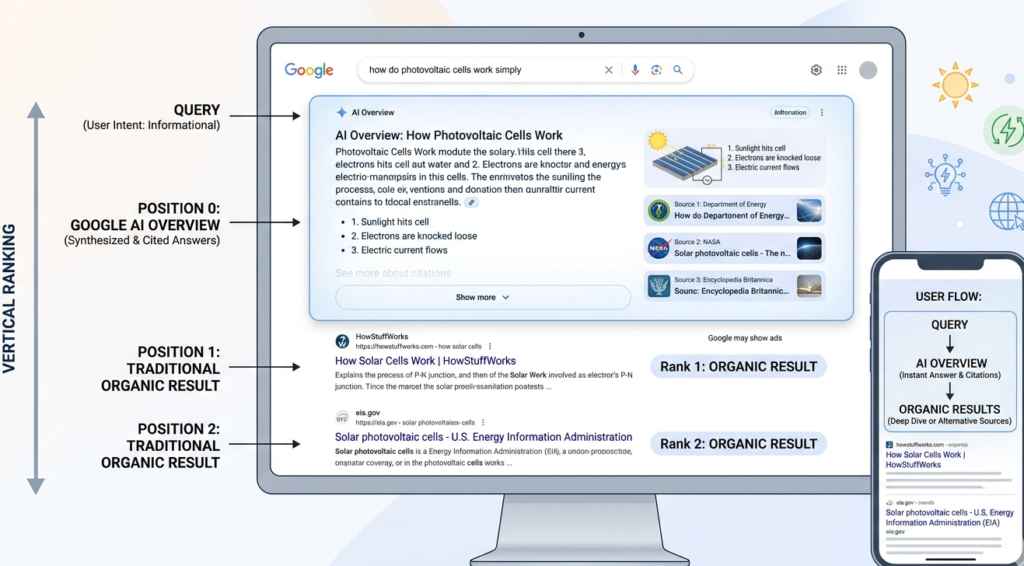
TL;DR: SEO (Search Engine Optimization) gets your pages ranking on Google. AEO (Answer Engine Optimization) gets your content cited in voice answers and featured snippets. GEO (Generative Engine Optimization) gets your brand referenced inside ChatGPT, Perplexity and Google AI Overviews. According to Semrush’s 2025 data, AI Overviews now appear on 88 percent of informational queries. Only 38 percent of those citations come from top-10 organic results, per Ahrefs. In 2026, ranking is not enough. You need all three working together.
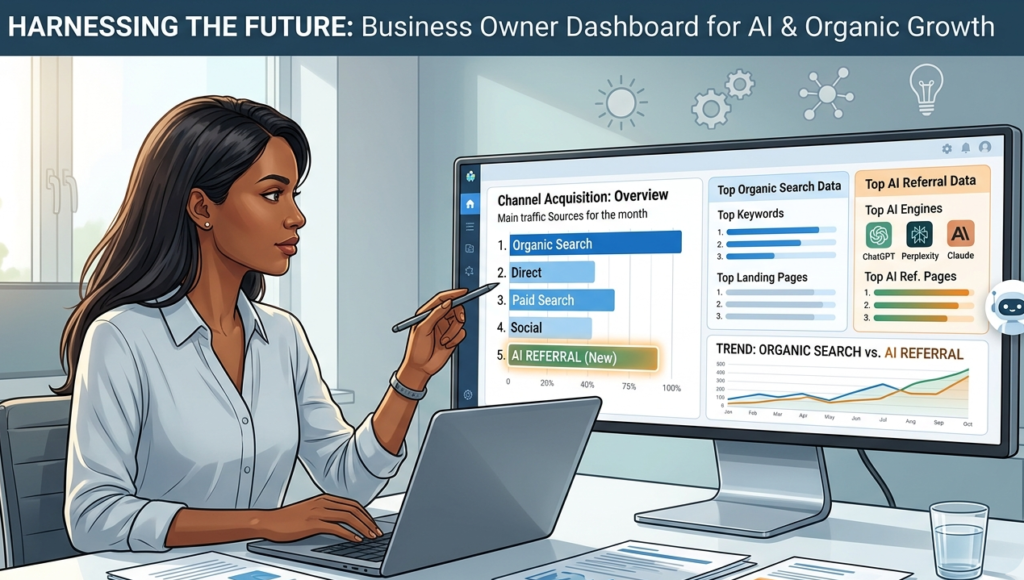
Search used to be simple. You wrote a page, Google ranked it and people clicked through. That model still works, but it no longer covers the full picture. Today, a growing share of search traffic never reaches your site at all. It gets answered directly by AI tools, voice assistants and generated summaries. So if you only optimise for traditional search, you are already losing ground you cannot see in your analytics.
What Is SEO, and Is It Still Worth Doing?
SEO is the practice of making your web pages rank higher on Google and other search engines for specific keywords. It covers technical site health, on-page content, backlink authority and user experience signals.
Yes, SEO is still worth doing in 2026. According to Conductor’s 2025 study, organic search still drives more website traffic than any other channel. The rules have shifted, but the foundation has not. Without solid SEO, your site has no authority for AEO or GEO to build on.
Think of SEO as the bedrock. Strong keyword research, clean site architecture and quality content are prerequisites, not optional extras.
What SEO covers in 2026
- Technical health: crawlability, Core Web Vitals, mobile performance
- On-page optimisation: titles, headings, structured data
- Content: topical authority across a defined subject area
- Backlinks: third-party sites vouching for your credibility
- Local SEO: Google Business Profile, map pack rankings
What Is AEO, and Why Does It Matter for Voice and Snippets?
AEO is the practice of structuring content so answer engines, including Google’s featured snippets, Siri and Alexa, can extract and read your answer directly. The goal is to be the answer, not just a link.
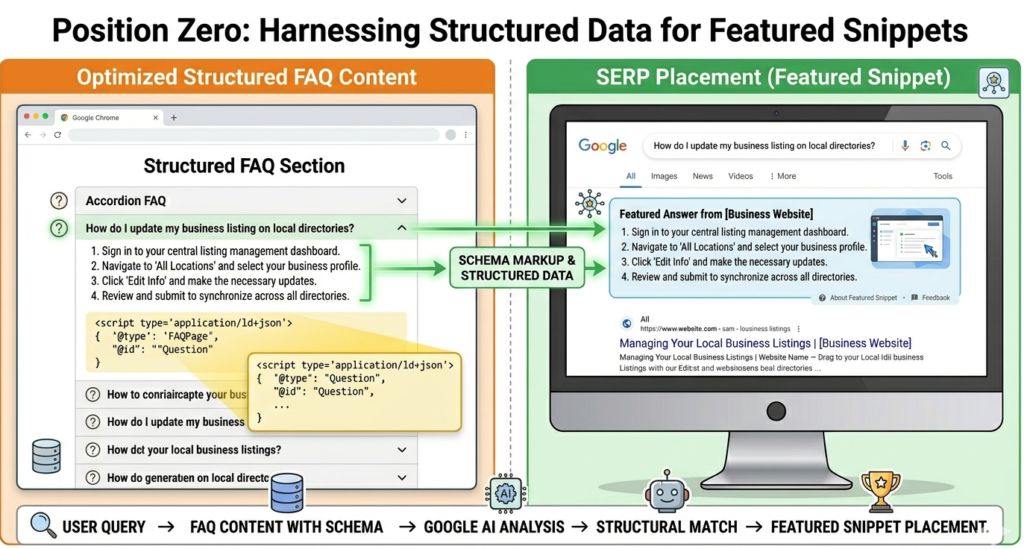
AEO relies on clear question-and-answer formatting, FAQ schema markup and concise answer blocks under each heading. If you have ever seen a paragraph inside a blue box at the top of Google results, that is AEO working. Google’s structured data documentation shows exactly which markup signals trigger those placements.
Voice search makes AEO more urgent for local businesses. A user asking “what is the best physio near me” gets one spoken answer, not 10 blue links. Being that answer requires AEO-ready content.
What Is GEO in Marketing, and How Is It Different?
GEO, or Generative Engine Optimization, is the practice of making your content citable inside AI-generated responses from tools like ChatGPT, Perplexity and Google AI Overviews. It is newer than SEO and AEO and it operates by different rules.
According to a 2025 Princeton study cited by Search Engine Journal, adding named sources and statistics to content lifts AI visibility by over 40 percent. ChatGPT pulls about 48 percent of citations from Wikipedia-style structured sources. Perplexity pulls about 47 percent from community and editorial content. GEO is not about keywords. It is about credibility signals and content structure.
For my work with clients at Alpha Ahead, GEO is now a standard part of every content brief. The question is not whether AI engines will encounter your content. They will. The question is whether your content is written in a way they can extract and trust.
What GEO requires
- Named entities: real tools, real people, real organisations
- Cited statistics with year and source inline
- Front-loaded answers (direct answer in the first 60 words of a section)
- Structured formatting: H2s, H3s, bullet lists and data tables
- Content that reads like a reliable reference, not a sales page
What Is the Difference Between SEO, AEO and GEO?
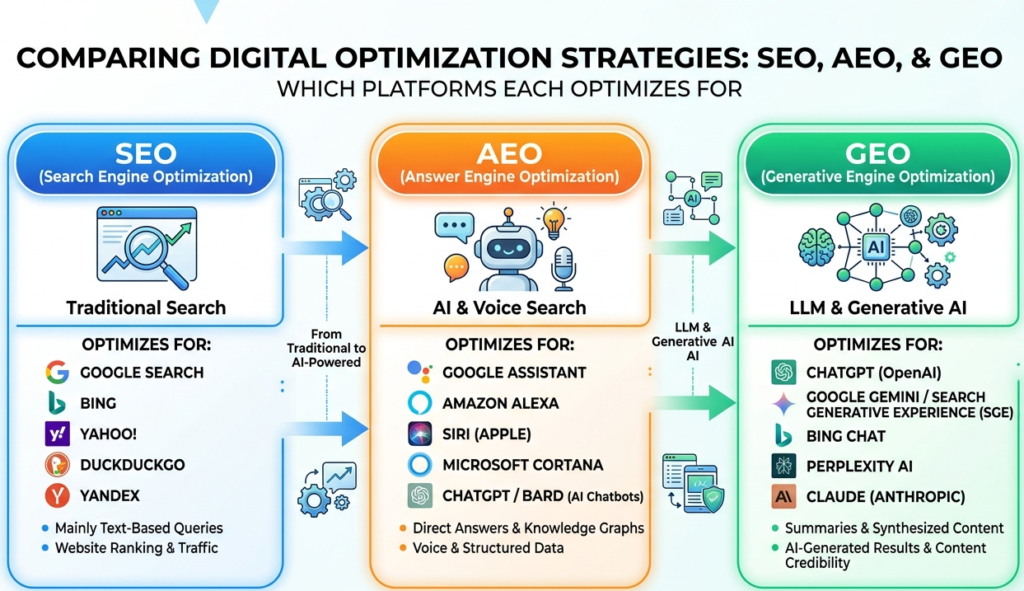
The difference between SEO, AEO and GEO comes down to which system you are optimising for and what outcome you want.
| Term | What it optimises for | Primary goal |
| SEO | Google and Bing rankings | Clicks to your website |
| AEO | Featured snippets and voice assistants | Direct answers on-platform |
| GEO | AI-generated responses (ChatGPT, Perplexity, AI Overviews) | Citations inside AI answers |
All three share a common requirement: high-quality, trustworthy content. But their tactics differ. SEO focuses on keyword targeting and backlinks. AEO focuses on schema markup and question-answer structure. GEO focuses on entity density, cited statistics and reference-style writing.
If you want to see how these tactics look in practice, my SEO content writing services page shows how I apply all three to client projects.
Which One Does Your Business Actually Need?
Most businesses need all three, but the priority order depends on your industry and search intent. Local service businesses (therapists, physios, solicitors) benefit most from SEO and AEO first, because their customers still click and call. B2B companies and thought-leadership brands need GEO urgently, because their buyers research through AI tools before they ever visit a site.
For healthcare and professional services, AEO is particularly critical. Voice and AI answers dominate “near me” and “how do I” queries in those sectors. I have written GEO and AEO-structured content for Mayfair Therapy and the difference in snippet visibility was measurable within 60 days.
According to Ahrefs’ AI Overviews study, only 38 percent of AI Overview citations come from top-10 organic results. So even if your SEO is excellent, you can still be invisible in AI answers without GEO-focused content.
Ready to Show Up in Both Search and AI Answers?
Most business owners I work with are great at what they do. They just have not had time to figure out why their content ranks but does not get cited. That is exactly what I help with. If you want content that works across Google, voice and AI tools, get in touch and I will tell you what your site needs and what it does not.
FAQs
Is GEO replacing SEO in 2026?
No. GEO is not replacing SEO; it is extending it. Google still processes over 8.5 billion searches per day and organic rankings still drive more traffic than any other channel, per Conductor’s 2025 report. But because AI Overviews now appear on 88 percent of informational queries (Semrush, 2025), ranking on page one is no longer sufficient on its own. GEO adds the layer that makes your content citable inside those AI-generated results.
Do I need to do all three, or can I pick one?
You can start with one, but they are not fully separable. SEO builds the domain authority that AEO and GEO rely on. AEO creates the structured answers that AI tools also pull. GEO adds the entity and citation signals that boost AI visibility. For most small and midsize businesses, the practical starting point is SEO and AEO together, with GEO signals built into every new piece of content from day one.
Which industries actually need AEO and GEO?
Any industry where buyers research through conversational search or voice queries benefits from AEO and GEO. That includes healthcare, legal, financial services, real estate, B2B SaaS and professional consulting. If your potential customers ask Google or ChatGPT questions like “what is the best way to…” or “who provides X in my area,” your content needs to be structured to answer those questions directly, not just rank for them.
How do I know if my website is AEO ready?
Check for three things. First, do your key pages use FAQ schema markup? Second, does each important section start with a clear 40-to-60 word direct answer before expanding into detail? Third, does Google Search Console show any featured snippet impressions for your target queries? If the answer to all three is no, your site is not AEO ready. Tools like Google’s Rich Results Test can confirm whether your structured data is valid.
Are AEO and GEO just new buzzwords for the same thing?
They are related but not identical. AEO targets existing answer engines like featured snippets and voice assistants, which have been part of Google since 2016. GEO targets a newer category: AI language models generating original responses, specifically ChatGPT, Perplexity and Google AI Overviews. Both require structured, direct content. But GEO also demands named entities, inline citations and reference-style writing that traditional AEO does not require.