
Quick Answer
Answer engine optimization is the practice of structuring your website content so AI tools like ChatGPT, Perplexity and Google AI Overviews can read it, trust it and quote it directly in their answers. Unlike traditional SEO, which aims for a ranking position, AEO aims for a citation inside the AI-generated response itself. The method involves writing direct 40 to 60 word answers at the top of sections, adding FAQ and Article schema, and citing named sources. SparkToro data from 2026 puts the zero-click search rate at 65%, which is why this matters now.
- 65% of Google searches now end without a click to any website, according to SparkToro and Datos 2026 data.
- Pages using FAQPage schema see 28% higher AI citation rates, per Averi’s 2026 AEO research.
- Content updated within the last 3 months is twice as likely to be cited by AI engines, based on SERPs.io’s 2026 content structure analysis.
- The Princeton, Georgia Tech and IIT Delhi GEO study (Aggarwal et al., 2024) found that adding citations and statistics to content boosts AI citation frequency by more than 40%.
- 82% of AI citations come from earned or third-party media rather than brand-owned pages, according to Muck Rack’s 2026 data.

Introduction
Most business owners still measure their website by rankings and clicks, and that measurement is already out of date. Running content audits at Adnnel for clients across real estate, dental and restaurant industries has shown a consistent pattern this year: pages that rank on page one are losing traffic anyway, because the answer is now appearing directly inside Google’s AI Overview before anyone reaches the results list. The traffic did not disappear. It moved into a citation, and most businesses have no idea whether they are in it or not. This guide explains what answer engine optimization actually means and what to do about it.
What Is Answer Engine Optimization?
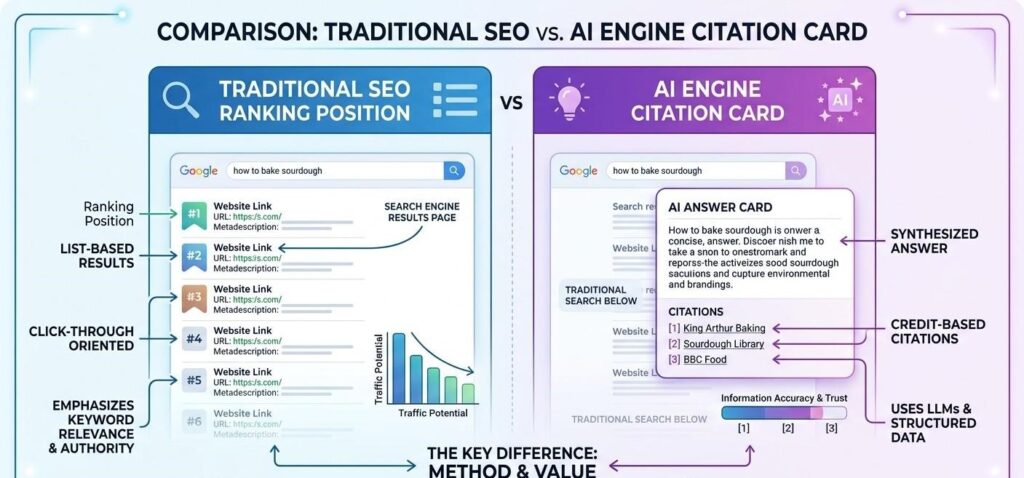
Answer engine optimization, often shortened to AEO, is the practice of writing and structuring content so AI systems can extract a direct answer from it and cite your business as the source. AI Overviews, ChatGPT and Perplexity do not rank ten blue links and let the user choose. They read across multiple sources, select what they judge to be the clearest and most trustworthy answer, and quote it. AEO is how you become that answer.
This differs from traditional SEO in one important way. SEO optimizes for a ranking position a human will click. AEO optimizes for a sentence or paragraph an AI system will lift and attribute to you, often with no click involved at all. Both disciplines share a foundation, since AI Overviews still draw heavily from pages that already rank well in organic search. A 2026 dataset from SERPs.io found that 76% of AI Overview sources come from the organic top 10, which means AEO does not replace SEO. It builds on top of it.
Why the Word “Answer” Matters
The naming is deliberate. Google, ChatGPT and Perplexity are not search engines in the old sense anymore. They are answer engines. A person asks a question and expects a complete answer in the response itself, not a list of places that might have the answer. Content written to be found is no longer enough. Content has to be written to be lifted out, word for word in some cases, and placed inside someone else’s response.
Why It Is Not Optional Anymore
AI Overviews now reach roughly 2.5 billion people a month and Google’s AI Mode passed 1 billion monthly active users, based on Instant Press’s 2026 AEO statistics compilation. When an AI Overview appears for a query, the result sitting in position one loses about 58% of its clicks, according to Ahrefs’ December 2025 study of 300,000 keywords. That click is not gone. It went to whichever source the AI Overview decided to cite.
How Big Is the Zero-Click Problem, Really?
Zero-click search has gone from a minority pattern to the dominant one. SparkToro and Datos found that 65% of all Google searches in 2026 end without a click to any external website, up from 56% before AI Overviews launched broadly. For queries where an AI Overview appears specifically, that rate climbs further. Seer Interactive’s analysis of 25.1 million impressions found that AI Mode queries produce zero outbound clicks 93% of the time.
The instinct here is to panic about lost traffic. That instinct is only half right. Seer Interactive’s broader study of 3,119 informational queries across 42 organizations found that organic click-through rate dropped 61% for brands not cited in the AI Overview, but brands that were cited saw 35% more organic clicks and 91% more paid clicks compared to non-cited competitors on the same queries. Zero-click search did not erase the opportunity. It moved the opportunity behind a gate, and the gate is citation.
| Metric | Without AI Citation | With AI Citation |
| Organic CTR change | -61% | +35% |
| Paid CTR change | baseline | +91% |
| Visitor conversion rate | standard | 4.4x higher |
| Time on site | standard | +68% |
Source: Seer Interactive, 2025-2026 data, and Frase’s 2026 AEO guide on AI visitor behavior.
How Do You Actually Get Cited by AI Engines?
Getting cited comes down to four mechanical changes: answer the question in the first 40 to 60 words of a section, add FAQ and Article schema, attribute every statistic to a named source, and keep the page updated. None of these are difficult individually. Doing all four consistently across a site is what separates businesses that show up in AI answers from businesses that do not.
Write the Answer Before the Explanation
AI engines scan for the clearest response to a query, and if the answer is not in the first 40 to 60 words of a section, it has a much lower chance of being cited, per Quattr’s 2026 content structure analysis. This means flipping the traditional blog structure. Instead of building up to a conclusion, state the conclusion first and use the rest of the section to support it. A reader who only sees the first two sentences should still have the full answer.
Add Schema Markup That Tells AI What It Is Reading
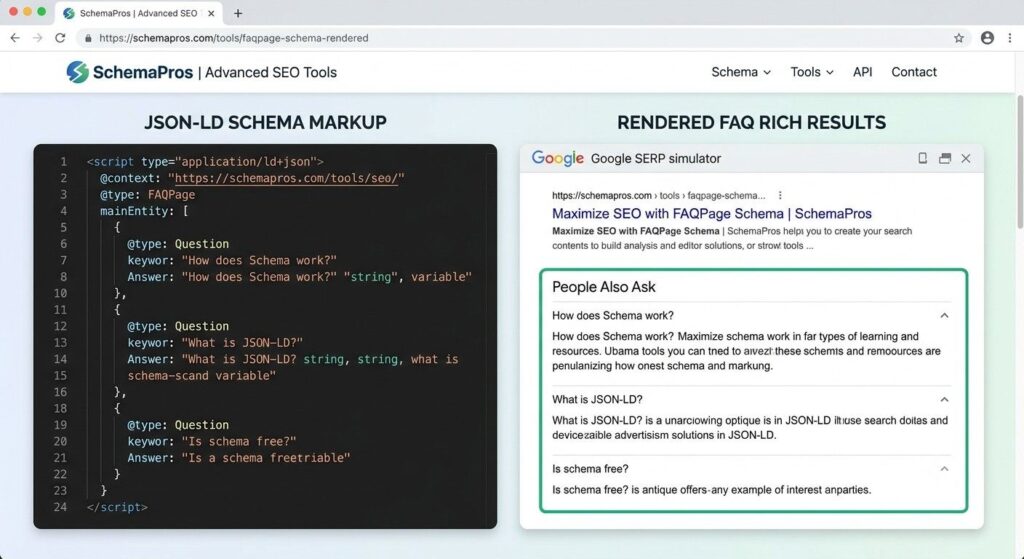
Schema markup is a translation layer. Without it, an AI system has to guess what type of content it is parsing. With it, the system knows immediately. Content with proper schema markup has up to a 2.5 times higher chance of appearing in AI-generated answers, according to Stackmatix’s 2026 structured data report, and sites with complete schema coverage see up to 40% more AI Overview appearances. FAQPage schema specifically lifts citation rates by 28%, based on Averi’s research. The highest-value schema types for AEO are Article or BlogPosting, FAQPage and HowTo, since each gives the AI engine a pre-structured format it can lift directly.
Cite Named Sources Inside Your Own Content
This is the part most businesses skip, and it is one of the highest-impact changes available. The Princeton, Georgia Tech and IIT Delhi study on generative engine optimization tested 10,000 queries and found that including citations, quotations and statistics inside content increases AI citation frequency by more than 40%. AI systems trust content that already behaves like a trustworthy source. Naming the study, the year and the organization behind a number is not just good practice. It is a direct citation signal.
Keep Content Current
AI systems carry a strong recency bias that most content calendars are not built around. Content updated within the last three months is twice as likely to be cited than content left untouched, and 95% of ChatGPT citations trace back to content updated within the past 10 months, according to SERPs.io’s 2026 analysis. Past that window, content becomes functionally invisible to some AI systems regardless of how good it is. AI systems can also detect whether a page has been substantively revised, not just whether the published date changed, so updating the date alone without updating the content will not help.
What Should the FAQ Section Actually Look Like?
A well-built FAQ section is the single highest-ROI content change available for AEO, because the format already matches how AI systems extract information. Pages with properly implemented FAQPage schema provide AI engines with pre-formatted question-answer pairs that are ready for direct citation, and each answer needs to make complete sense without the rest of the page around it. AI systems frequently extract one FAQ entry out of five, not the whole set, so every individual answer carries the full weight of representing your business in that moment.
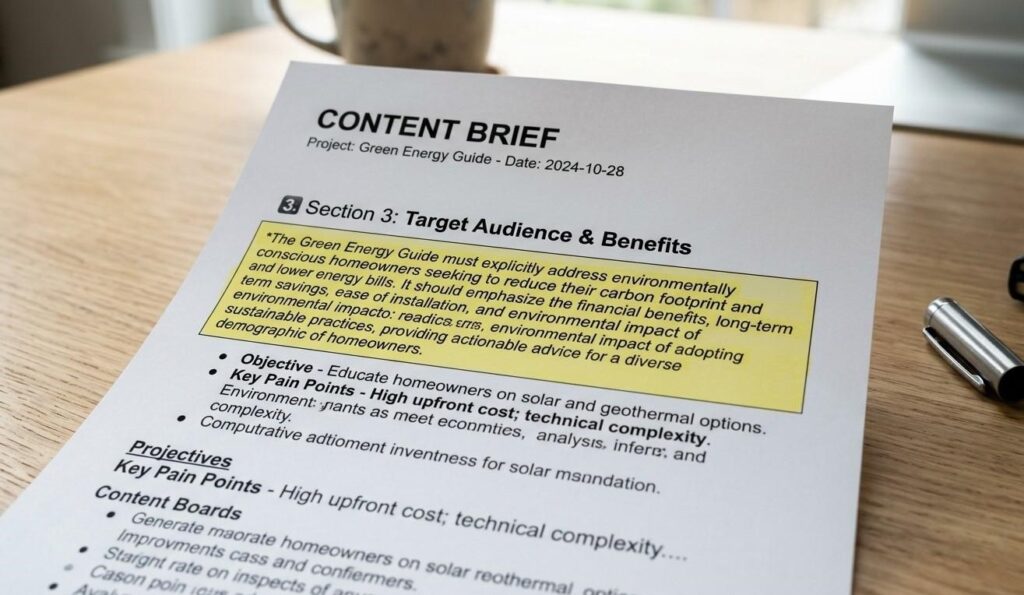
The format that works: a 40 to 60 word direct answer first, optionally followed by one sentence of additional context. Questions should mirror how people actually talk to ChatGPT or Perplexity, not how they type into a search bar. “What is answer engine optimization” performs differently than “AEO meaning,” even though a traditional SEO brief would treat them as the same keyword.
How Does This Compare to Traditional SEO Work?
AEO does not replace SEO. It sits on top of it, since AI Overviews still draw most of their source material from pages already ranking in the organic top 10. The two disciplines pull in the same direction more often than they conflict, and a content strategy built well for AEO will usually help organic rankings too, because both reward clarity, structure and named sourcing over vague, padded writing.
The full breakdown of how SEO, AEO and GEO relate to each other, including where the lines blur and where they genuinely differ, gets its own treatment in SEO vs AEO vs GEO: what every business owner needs to know. For the mechanics of how ChatGPT specifically decides which sources to trust, how ChatGPT chooses sources goes deeper into that one engine’s behavior. And for the traffic-side argument that makes all of this worth doing, zero-click search and what it means for your business lays out the click economics in full.
Getting Your Business Cited, Not Just Ranked
If your site already ranks reasonably well and the traffic still feels thinner than it should, the gap is probably citation, not ranking. Adnnel’s AEO and GEO services build the schema, structure and source citation layer on top of existing content rather than starting from zero, which is usually the faster path to visibility. A short conversation through the contact page is the easiest way to find out where your content currently stands.
Frequently Asked Questions
What is the difference between AEO and SEO?
SEO optimizes content to rank in a list of search results that a human will click. AEO optimizes content so an AI system can extract a direct answer and cite it, often without any click happening at all. Both rely on similar foundations of clarity and structure, but AEO adds direct-answer formatting, schema markup and named source citation as priorities.
How do I know if my content is being cited by AI?
Search Console will not show this directly. Dedicated tools like Otterly.ai, Peec AI or Promptmonitor track AI citation visibility specifically. Only 14% of marketers currently track this metric according to Goodfirms’ 2026 survey data, which means most businesses are flying blind on whether their AEO work is paying off.
Does ChatGPT cite the same sources as Google AI Overviews?
Not always. Google AI Overviews lean more heavily on traditional organic ranking signals, with 76% of sources drawn from the existing top 10 search results. ChatGPT and Perplexity weigh earned and third-party media more heavily, with Muck Rack finding that 82% of AI citations across platforms come from non-owned, non-paid sources rather than brand websites.
Will adding FAQ schema alone get my content cited by AI?
Schema improves the odds by a wide margin, lifting citation rates by roughly 28% on its own, but it does not replace the underlying content quality. A clear, direct, well-sourced answer wrapped in FAQPage schema performs far better than schema applied to vague or padded writing. Schema tells the AI what it is reading. It does not fix what the content actually says.
How often do I need to update content for AEO to keep working?
Within three months is the benchmark that meaningfully improves citation odds, and most ChatGPT citations trace back to content updated within the past 10 months. This does not mean changing the publish date. AI systems can detect whether the substance of a page has actually changed, so the update needs to add real information, not just a new timestamp.