Keys Takeaway: Roofing SEO builds an organic lead pipeline that costs far less per booked job than shared lead platforms. According to ProWeb365’s 2026 contractor lead analysis, Angi’s average customer acquisition cost is approximately $2,500 while SEO delivers a comparable booked job for $290 to $310. Shared leads from Angi and HomeAdvisor go to three to five roofers simultaneously and convert at just 6 to 10%. Organic search leads convert at 18 to 24% because the homeowner chose to contact you specifically. The local SEO foundation for roofers covers three areas: Google Business Profile completeness, service-area pages targeting city-plus-service keywords and a consistent review acquisition system that builds map pack authority over time.
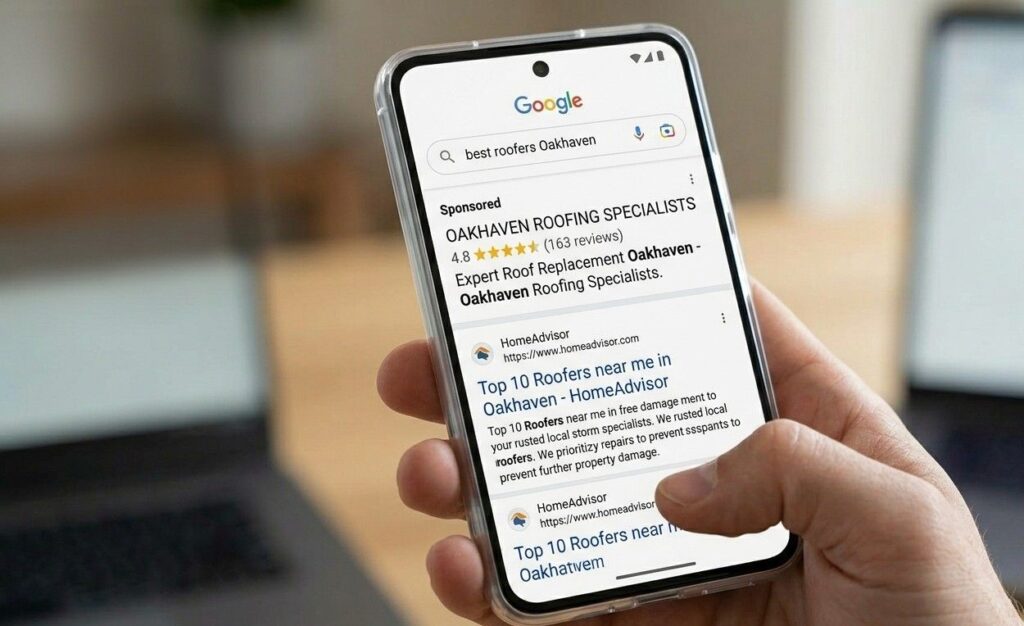
Most roofing companies discover the Angi problem six months in. The leads arrive, three competitors call the same homeowner within minutes and the job goes to whoever drops their price first. Roofing SEO offers the alternative: a pipeline of exclusive inbound calls from homeowners who searched and found your company specifically. Building that pipeline takes longer than a lead platform subscription. But once it’s running, it doesn’t stop delivering the moment you cancel a membership. This post covers the specific SEO moves that let roofers own local search instead of renting visibility from aggregators.
Why HomeAdvisor and Angi Are Getting More Expensive for Roofers
Angi and HomeAdvisor deliver shared roofing leads at $50 to $100 or more per lead while distributing that same lead to three to five competing contractors at the same time. The economics deteriorate further when you factor in close rates. According to a 2024 Contractor Growth Network survey cited by PushLeads, shared platform leads close at 15 to 20%. That makes the effective cost per booked roofing job between $250 and $750, before overhead.
The structural problem is that you’re not buying a customer. You’re buying a chance to race three other roofers to a homeowner’s phone. According to Adapt Digital’s 2026 contractor marketing analysis, contractors routinely report effective customer acquisition costs exceeding $1,400 per booked job on Angi. That’s roughly four to five times what organic SEO costs for the same result.
The FTC also fined HomeAdvisor in 2023 for “deceptive and misleading” claims about lead quality. That action reinforced what contractors had already discovered: the platform’s incentives favor lead volume, not lead accuracy. Still, many roofers stay because they haven’t yet built an alternative. The good news is that the alternative is predictable once you know where to start.
According to BaaDigi’s 2026 roofing leads analysis, once established, organic SEO leads cost $5 to $15 each with no ongoing per-click expense. Getting there takes six to twelve months of consistent work. That’s the tradeoff: slower to build, but the leads compound and the cost drops over time instead of rising.
What Roofing SEO Actually Needs to Beat the Directories
Roofing SEO requires three foundations to outrank HomeAdvisor and Angi in local results: a fully optimized Google Business Profile with active review intake, dedicated service-area pages targeting city-plus-service keyword combinations and enough Bing indexation to support Google Local Services Ad eligibility. These three elements compound together. Strong GBP signals feed map pack rankings, service pages capture organic results below the map and reviews lift both simultaneously.
Your Google Business Profile Is the Foundation of Roofing SEO
Google Business Profile drives your map pack placement more directly than any page on your website. For roofers, the key fields are service areas, listed services with descriptions and a primary category of “Roofing Contractor.” Photos of completed jobs, updated weekly, signal an active business. According to Semrush’s 2024 GBP study cited by PushLeads, businesses that post to GBP weekly see 18% more profile views than those posting monthly.
GBP consistency is also critical. Your company name, address and phone number must match exactly across your GBP, your website’s footer, the Better Business Bureau listing and any roofing association directories. A mismatch as small as “Roofing Co” versus “Roofing Company” suppresses local rankings. Most roofing companies catch this only after running a citation audit. The GBP optimization steps for 2026 cover the specific fields, photo cadence and post frequency that drive local map pack ranking for service contractors.
Service Pages With Location Signals Outrank Aggregator Listings
HomeAdvisor and Angi rank because they have high domain authority and thousands of pages targeting local roofing queries. The way to outrank them is not to compete on authority but to create pages with more specific local signals than any national platform can generate. A page titled “Roof Replacement in [City], [State]” with content mentioning local building codes, storm damage patterns specific to that region and neighborhood-level service areas outranks a national directory’s generic city landing page because Google rewards specificity.
Each major service you offer needs its own dedicated page targeting a distinct keyword. “Roof replacement,” “roof repair,” “storm damage inspection” and “commercial roofing” each draw a different searcher with different intent. A single “services” overview page cannot rank for all of them. The same structure I apply to local SEO for other contractor trades applies directly here: one page per service, one page per primary service area and internal links connecting them.
Should Roofers Target Storm Damage or General Roofing Keywords First?
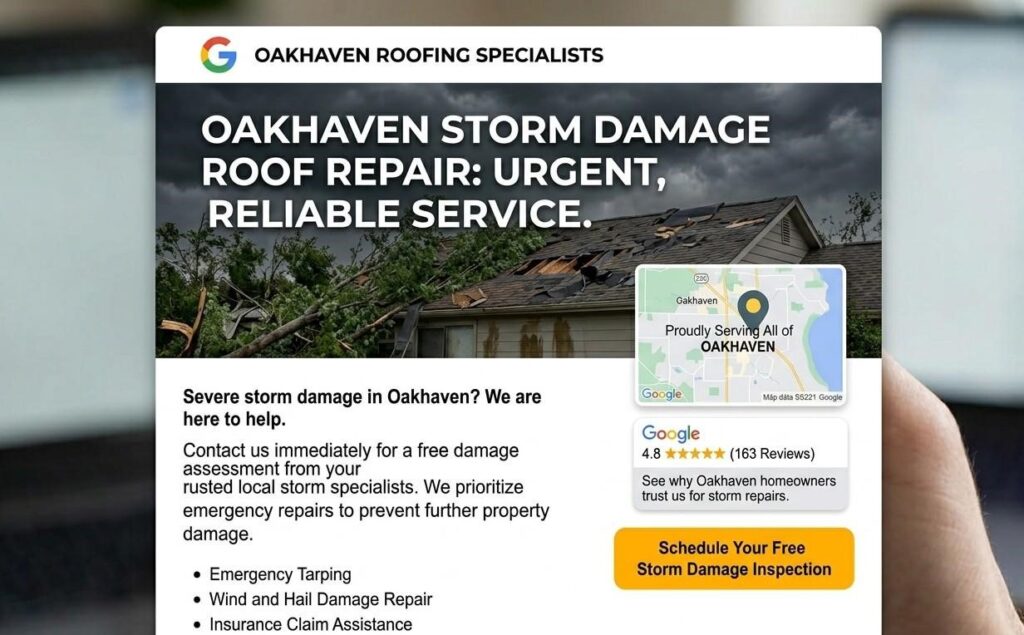
Target both, but with different pages. Storm damage keywords like “emergency roof repair after hail” carry urgent, high-intent searches that spike after weather events and carry very high job values. General roofing keywords like “roof replacement [city]” drive consistent year-round search volume. Targeting both from separate pages prevents keyword overlap and lets each page rank for its distinct audience.
Storm damage content performs especially well when it goes beyond generic advice. A page describing hail damage thresholds specific to your local climate zone, insurance claim process guidance and a direct call to action for a free inspection converts better than a national template. According to Roofr’s 2025 Roofing by the Numbers report, 63% of roofing business owners say generating new leads is their top growth challenge. Storm-season content that ranks before the season starts fills your inspection calendar with exclusive inbound calls before competitors have even updated their websites.
The local SEO content strategy I use for service businesses, which applies the same geographic specificity principles across multiple industries, appears across the local case studies on wajahatamin.com. Storm and seasonal content are the clearest opportunities in roofing because the intent is high, the timing is predictable and the competition at a hyper-local level is thin.
Do Roofing Reviews Matter More Than Backlinks for Local SEO?
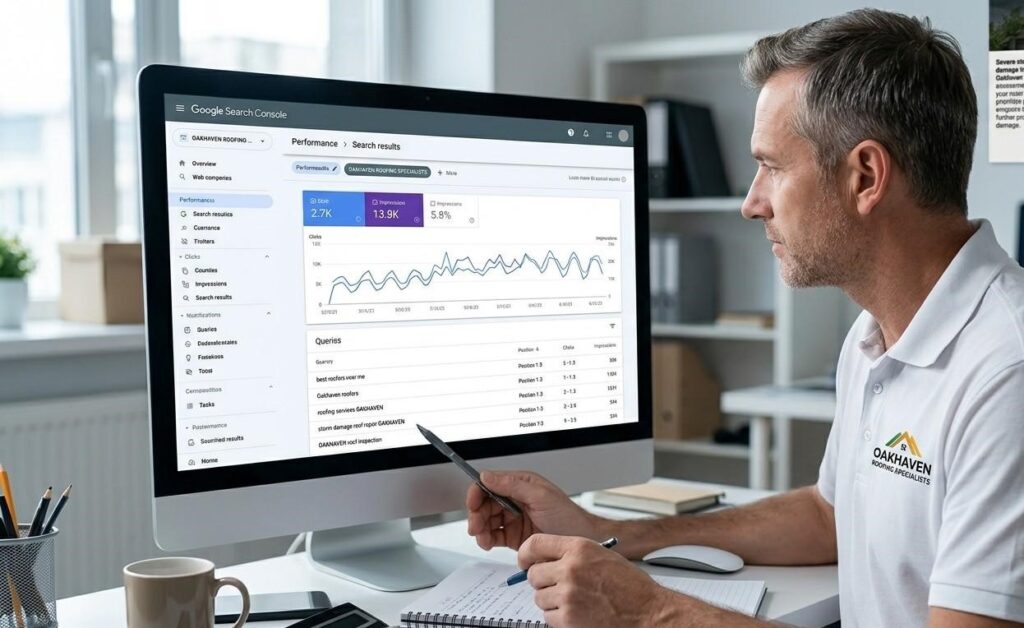
Reviews drive map pack rankings more directly than backlinks for local service businesses like roofing companies. Google’s local algorithm ranks businesses by relevance, distance and prominence. Review volume and recency feed prominence. Backlinks build domain authority, which matters more for organic rankings below the map than for map pack placement itself. Both matter, but in different ways and on different timelines.
How Review Volume Drives Roofing Map Pack Rankings
According to BrightLocal’s 2025 Local Consumer Survey cited by PushLeads, 76% of consumers who find a local service business through organic search visit the website within 24 hours. Review count and rating are the primary factors they see before clicking. A roofing company with 120 reviews at 4.7 stars appears more credible in the map pack than one with 25 reviews at 4.9, because volume signals consistent performance over time.
The most effective review acquisition system for roofers combines a direct in-person ask at job completion with a text message containing the Google review link, sent within an hour of finishing work. That timing captures the homeowner while satisfaction is highest. According to Roofr’s 2025 report, 71% of roofers rely on word-of-mouth referrals. A review acquisition system turns that referral intent into a public Google signal that benefits every future customer’s search.
Where Backlinks Fit in a Roofing Company’s SEO Strategy
Backlinks matter for organic results below the map pack, which is where detailed service pages and storm damage content compete. The best backlink sources for roofers are local ones: Chamber of Commerce listings, roofing manufacturer partner directories like GAF or CertainTeed and local news coverage from any significant projects or storm response work. Local backlinks carry stronger geographic relevance signals than national SEO links and are far easier to earn without a dedicated outreach team.
The content briefs and local SEO approach I outline on my SEO content writing services page treat review acquisition and local link building as parallel tracks, not competing priorities. Reviews fill the map pack. Links feed the organic results. Both compound over 6 to 12 months. For context on how local SEO compounding works for other service businesses, the local ranking guide for service businesses uses the same framework.
Ready to Build a Roofing Lead Pipeline You Actually Own?
Paying for leads that go to three other roofers is a budget you can redirect the moment you have an alternative in place. If you want a content and local SEO strategy built around your service area, your key services and the keywords homeowners in your market actually search, start the conversation through my contact page and we’ll look at where your current online presence stands against the directories. No guesswork, just a real look at the opportunity.
Frequently Asked Questions
Is SEO worth it for a small roofing company with a limited budget?
Yes, particularly for roofers who are already spending $500 or more per month on shared lead platforms. According to ProWeb365’s 2026 analysis, SEO delivers a comparable booked job for $290 to $310 compared to Angi’s $2,500 customer acquisition cost. The timeline is longer: most roofers see meaningful lead flow from organic search at six to twelve months. But because the leads are exclusive and compound over time, the return on investment grows rather than staying flat, which is the opposite of what happens on shared lead platforms.
How do I compete with HomeAdvisor when it dominates roofing search results?
Target geographic and service-specific queries instead of broad ones. HomeAdvisor and Angi rank for “roofing contractor” and “roof replacement” nationally. But a dedicated page for “storm damage roof repair [your city]” or “metal roofing installation [specific neighborhood]” targets searchers with more specific intent. Those narrower pages face significantly less competition, rank faster for smaller companies and convert better because they match what the homeowner actually searched. Focus on service-plus-location combinations where national directories publish thin, generic content.
Should I target storm damage roofing keywords or general roofing keywords?
Target both with separate dedicated pages. Storm damage keywords like “hail damage roof inspection” spike after weather events and carry urgent, high-value intent. General keywords like “roof replacement [city]” drive consistent year-round volume. A storm damage page with local climate context, insurance claim guidance and a free inspection call to action converts differently than a general replacement page. Because each page targets distinct search intent, they don’t compete with each other and both contribute to your overall organic traffic over time.
Do Google reviews help roofing SEO more than backlinks?
Reviews have a more direct impact on map pack rankings, which is where most local roofing calls originate. Backlinks build domain authority, which lifts the organic rankings below the map for service and location pages. Both contribute to long-term visibility, but reviews are the faster win for most roofing companies because Google’s local prominence signal updates more immediately in response to review volume than it does in response to new backlinks. Prioritize getting 5 new genuine reviews per month while building local backlinks from manufacturer directories and Chamber of Commerce listings.
How long does roofing SEO take before I see real leads coming in?
Most roofing companies see initial ranking movement in the first 60 to 90 days but meaningful inbound call volume typically arrives between months six and twelve. The first three months establish your Google Business Profile, get service pages indexed and begin review accumulation. Months four through six produce map pack appearances for lower-competition local queries. According to BaaDigi’s 2026 analysis, organic leads from established roofing SEO cost $5 to $15 each with no ongoing per-click expense. That cost per lead continues dropping as rankings hold and new pages compound the site’s authority.