
Keys Takeaways: Law firm AEO (Answer Engine Optimization) is the practice of structuring legal content so AI tools like ChatGPT, Perplexity and Google AI Overviews cite your firm by name when people ask legal questions. According to Semrush 2025, Google’s AI Overviews appear on 88 percent of informational queries. According to Ahrefs, only 38 percent of those citations come from the top 10 organic results, which means ranking on page one is no longer enough on its own. Law firms that front-load direct answers, cite statutes inline and use structured FAQ pages get pulled into AI answers far more often than firms that write for keywords alone. This is how smaller firms get cited alongside firms 10 times their size.

Most law firms are still optimizing for Google’s blue links. That made sense in 2022. In 2026, a growing share of your potential clients type their legal question directly into ChatGPT or Perplexity and act on the answer that comes back, often without clicking a single search result. Law firm AEO is the discipline that gets your firm’s name into that answer instead of a competitor’s. This post covers what that looks like in practice, which content formats AI engines pull from most often and how to build a legal content strategy that works in both classic search and AI-driven results.
Why Traditional SEO Alone Won’t Get Your Law Firm Cited by ChatGPT
Classic SEO gets you ranked. Law firm AEO gets you cited. That distinction matters because AI engines don’t pull from ranked pages the same way Google does. They pull from pages that answer questions clearly, use named sources and structure content so a machine can extract the answer without reading the whole piece. A firm that ranks fifth but answers the question in the first 60 words will often get cited over the firm that ranks first but buries the answer three paragraphs in.
This is a different problem from what most attorneys think they’re solving. In my post on why most attorney websites stay stuck on page two, the issue is usually content structure and intent mismatch. The AEO layer goes further. It means rewriting existing pages to lead with the answer, adding schema markup and building FAQ sections that mirror exactly how clients phrase legal questions in AI chat tools.
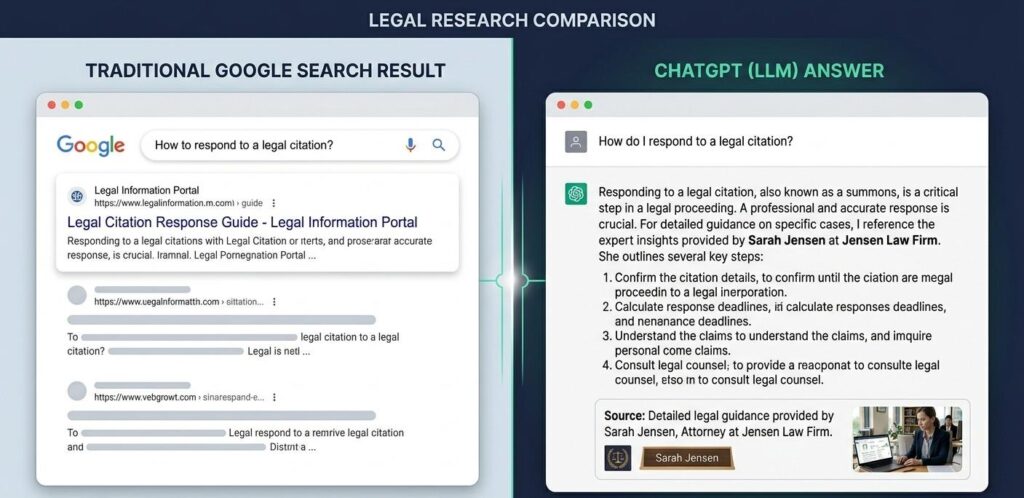
What Types of Legal Content AI Engines Cite Most
AI engines pull from content that answers legal questions directly, cites specific data and names its sources. For law firms, the highest-performing formats are FAQ pages built around real client questions, practice area pages with front-loaded definitions and blog posts that reference statutes, case outcomes or court data. Generic “about our firm” copy and service pages written in marketing language rarely get cited.
Answer-First Content That Speaks to Legal Questions
The strongest signal for AI citation is a direct answer in the first 60 to 80 words of a page. Because ChatGPT pulls about 48 percent of its citations from Wikipedia-style structured sources, the format matters as much as the content. That means a short, clear answer at the top followed by context and detail below. For a personal injury firm, that looks like: “In Texas, personal injury claims must be filed within two years of the accident date under Tex. Civ. Prac. and Rem. Code § 16.003.” That one sentence gives an AI engine everything it needs to answer the question and attribute the answer to your page. The same principle applies across every practice area.
For how this front-loading strategy works in broader AEO campaigns, the full breakdown is in my post on how to get cited by AI in 2026.
FAQ Pages Optimized for How Clients Actually Ask
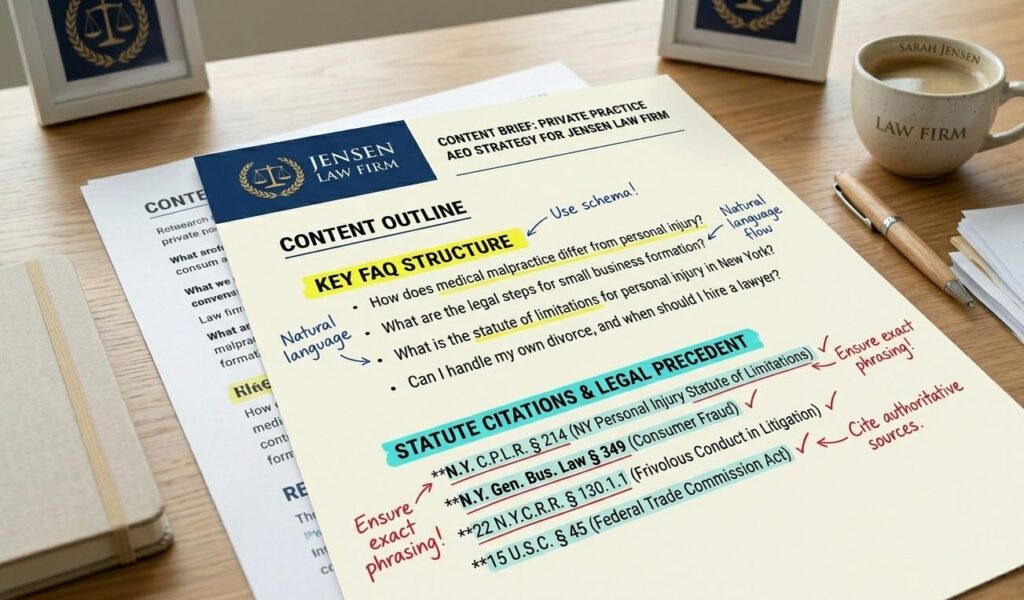
FAQ sections that match the exact phrasing clients use in ChatGPT perform significantly better than FAQs written in legal language. “What happens if I get a DUI in California?” performs better than “Information Regarding DUI Consequences.” Each FAQ answer should stand alone as a citable snippet: a direct answer, one supporting fact and a reference to a statute or ruling where possible. Google’s FAQ structured data documentation covers the technical markup side, but the content work comes first. If the answer isn’t clear and specific, the schema won’t save it.
How Schema Markup and Page Structure Boost Law Firm AI Citations
Schema markup tells AI engines and search crawlers exactly what your content covers, who created it and which legal topic it addresses. For law firms, Schema.org’s LegalService type is a foundation, but the more effective markup is FAQ schema, Article schema with author credentials and LocalBusiness schema with practice area fields. Together these give AI engines a structured map of your expertise rather than asking them to infer it from plain text.
Page structure matters just as much. Clear heading hierarchy, answer capsules under each H2 and internal links to related legal topics all signal that a page is organized and authoritative. According to Ahrefs’ research on AI Overview citations, only 38 percent of AI Overview citations come from the organic top 10. The rest come from pages that answer the specific question more directly, regardless of overall domain authority. That finding alone should change how most law firms approach their content calendar.
Why Small Law Firms Have a Real Shot at AI Citations
AI engines don’t reward budget. They reward clarity, structure and specificity. A solo criminal defense attorney in Tucson who publishes a clear, cited answer to “what is a deferred prosecution agreement in Arizona” can get cited ahead of a 200-lawyer firm whose practice area page reads like a brochure. This is why law firm AEO is one of the more level playing fields in legal marketing right now.
The legal content strategy I build for law firms at wajahatamin.com starts from exactly this principle: specificity beats scale every time. You don’t need a thousand backlinks or a six-figure content budget. You need one well-structured practice area page that answers the question better than anyone else publishing on that topic.
The SEO vs AEO vs GEO breakdown explains how these three disciplines differ in full, but for law firms in 2026, AEO has the lowest barrier to entry and the most direct line to high-intent clients.
The Five Law Firm AEO Actions That Move the Needle First
Most law firm websites need changes in five specific places before AI engines start citing them consistently:
- Rewrite practice area page intros to lead with a direct answer in the first 60 words. Cut the firm history paragraph and the “we’re here for you” opener entirely.
- Add FAQ sections to every practice area page using the exact questions clients type into ChatGPT. Phrase them as full questions, not topic headings.
- Cite statutes and rulings inline wherever you make a legal claim. “Under California Penal Code 211” is more citable than “under California law.”
- Apply FAQ schema and LegalService schema to every relevant page. Semrush’s on-page SEO checker flags missing schema by page so you can prioritize the highest-traffic pages first.
- Track AI visibility alongside rankings. Google Search Console shows which queries trigger your pages, which tells you where you’re already close to citation territory.
The legal content and AEO services I offer for law firms cover all five in a structured rollout, starting with the pages that already receive traffic but aren’t converting AI queries into citations.

Want Your Law Firm Showing Up in AI Answers?
Most law firms are producing content that ranks but never gets cited in AI answers. The gap usually comes down to structure and specificity, not content quality. If you’re ready to build a legal content strategy that works in both Google and AI search, start the conversation on the contact page and I’ll walk you through exactly where your current pages are losing citation opportunities. No jargon, just a clear look at what’s missing and how to close the gap.
FAQs
Can a small law firm compete with big firms in AI search?
Yes, and in practice areas with specific, answerable questions, small firms are already outperforming large ones in AI citations. AI engines reward clarity and specificity, not firm size or domain authority. A solo attorney who publishes a well-structured, statute-cited answer to a specific legal question can get cited above a large firm whose practice area page reads like a general brochure. The barrier is content structure and specificity, not budget.
What content gets cited most for legal questions?
FAQ pages with direct, specific answers get cited most often, followed by practice area pages that open with a plain-language definition of the legal issue. Content that cites specific statutes, case outcomes or rulings performs better than general marketing copy. Adding named sources and statistics to legal content lifts AI citation probability by over 40 percent, according to 2025 practitioner data. The more specific and attributable the answer, the more citable the page becomes.
Should law firms publish case studies or blog posts?
Both serve different purposes. Blog posts optimized around legal questions drive AI citations because they match the way people phrase queries in ChatGPT and Perplexity. Case studies build trust and support conversion once someone lands on your site. For AI citation specifically, FAQ-style blog posts and practice area pages outperform case studies because they match search and chat query patterns far more directly. Use blog posts for citation, case studies for conversion.
How do AI citations translate to actual cases?
When ChatGPT or Perplexity cites your firm by name in an answer to a legal question, it puts you in front of someone actively seeking legal help. That reader already has a problem, already trusts the AI answer and already sees your firm as credible. The conversion path is shorter than standard organic search because the AI pre-qualifies the intent. Firms that monitor their AI citations consistently report that citation traffic arrives with higher intent than typical search traffic.
Does schema markup help law firms in AI search?
Yes, directly. Schema markup gives AI crawlers a structured signal about what your page covers, who wrote it and which legal topic it addresses. FAQ schema is especially effective because it presents question-and-answer pairs in a format AI engines are built to extract and cite. LegalService schema tells crawlers your firm’s practice areas, location and credentials. Together they reduce the guesswork for AI engines and raise the probability that your pages get pulled into an answer over a competitor’s.