
Keys Takeaway: Medical spa SEO targets cash-pay patients who search for specific treatments by name and location before booking. The North American medical spa market was valued at $7.32 billion in 2024 and is projected to reach $8.44 billion in 2025, according to Metatech Insights via Ignite Web Design’s 2025 med spa SEO guide. According to SagaPixel’s 2026 medspa statistics report, 33% of med spa clients have household incomes exceeding $100,000 and 75% cite aesthetic enhancement as their primary reason for visiting. Medspa SEO succeeds when each treatment gets its own dedicated page, the Google Business Profile actively shows photos and reviews and the keyword strategy targets “near me” and treatment-plus-city searches that high-intent patients run immediately before booking.
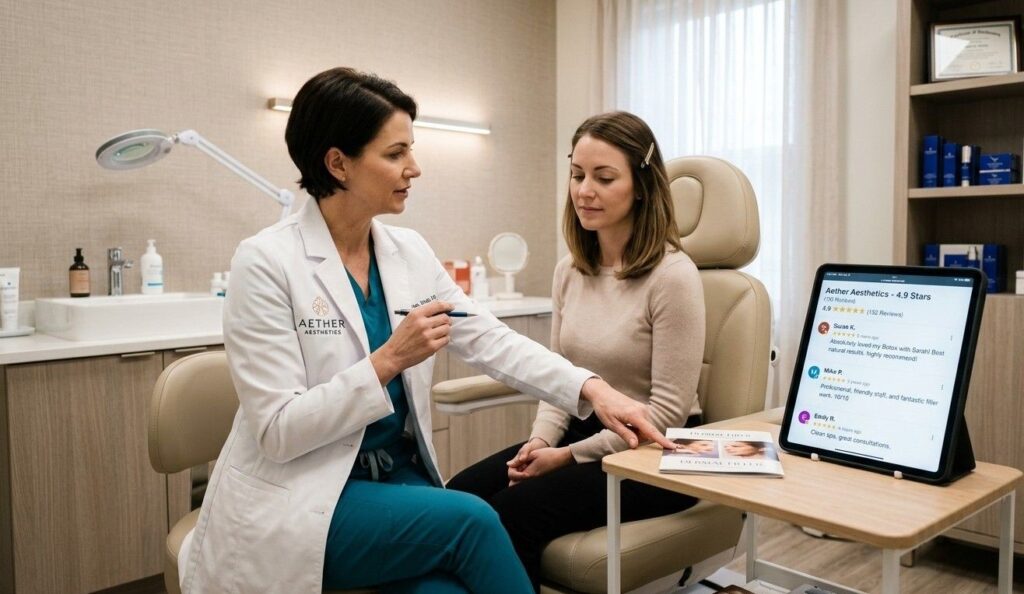
Most med spas that struggle with patient acquisition share the same problem: they have a beautiful website that ranks for nothing specific. “Medical spa [city]” is one URL. “Botox [city],” “lip filler [city]” and “laser hair removal [city]” each represent a distinct search with a distinct buyer, and a single services overview page cannot compete for all of them simultaneously. Medical spa SEO is not about being generally visible. It’s about owning the specific treatment searches that cash-pay patients run with credit card in hand. This post covers the structure that makes that happen.
Why Medical Spa SEO Differs From Standard Healthcare SEO
Medical spa SEO targets cash-pay, elective searches rather than insurance-driven or urgent-care queries. Patients searching for Botox, dermal fillers or laser skin resurfacing are self-selecting buyers who have already decided they want a treatment and are comparing providers on quality, trust and proximity. That intent pattern is closer to e-commerce SEO than to hospital or GP practice SEO.
Standard healthcare SEO focuses on building credibility for symptomatic searches: “rash on arm” or “knee pain specialist near me.” Medical spa SEO targets aspirational searches: “best lip filler [city]” or “Morpheus8 near me price.” The conversion path is shorter and more commercial because the patient isn’t looking for a diagnosis. They’re choosing a provider for a known treatment with a known cost.
According to AmSpa’s 2024 Medical Spa State of the Industry Report, the average medspa invests about 7% of revenue in marketing, with the range running from 2% to 15% depending on market competition and growth goals. The practices at the higher end of that range invest more because local search competition has intensified as the market grows.
The local SEO foundation for a medspa is similar to what I cover in the healthcare provider local SEO guide, but the keyword strategy, page structure and review language all shift toward elective, cash-pay intent rather than clinical need.
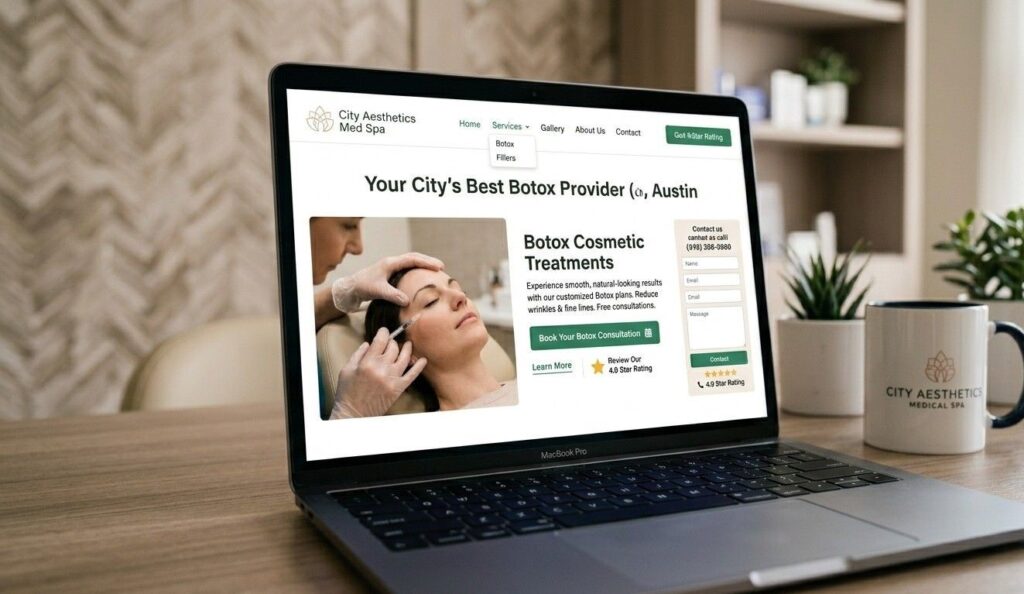
How to Target “Botox Near Me” and Other High-Intent Cash-Pay Keywords
The highest-converting medspa keywords combine a specific treatment name with a city or “near me” modifier. “Botox near me,” “lip filler [city]” and “laser hair removal [city] price” all draw searchers who are in the final stage before booking. Each of these searches needs a dedicated page because the searcher intent, the treatment context and the competing pages differ completely.
Here’s the keyword pattern that performs best across treatment categories:
| Treatment | Core Keyword Format | Secondary Variant |
| Botox | Botox near me / Botox [city] | Botox [city] price |
| Lip filler | Lip filler [city] | Lip augmentation [city] |
| Laser hair removal | Laser hair removal [city] | Laser hair removal [city] packages |
| Morpheus8 | Morpheus8 near me | RF microneedling [city] |
| HydraFacial | HydraFacial [city] | HydraFacial near me |
| Coolsculpting | Coolsculpting [city] | Body contouring [city] |
Each row represents at least two pages worth of SEO opportunity. The “near me” variant targets Google’s local pack. The city-specific page targets organic results below the map. Both contribute to patient acquisition and neither ranks well from a single generic treatments overview.
Note on Botox specifically: because Botox is a prescription drug manufactured by Allergan (now AbbVie), running paid ads for it on Google requires completing a Healthcare and Medicines certification in your Google Ads account, according to BestPPC’s injectable advertising compliance guide. Organic SEO carries none of those restrictions, which is another reason why search-driven content is a more sustainable patient acquisition channel than paid ads for injection-based services.
Should Medical Spas Have Separate Pages for Injectables, Lasers and Facials?
Yes. Each treatment category and each specific treatment within it deserves its own dedicated page. A page for “injectables” cannot rank for “Botox [city],” “lip filler [city]” and “Dysport [city]” simultaneously because those searches represent distinct patient decisions with distinct keywords. Google matches specific pages to specific queries, so a single category page ranks for none of them well.
The hierarchy that works best for medspa SEO follows three levels.
Treatment Category Pages as Your Mid-Level Hub
A category page for “Injectables” links to individual treatment pages for Botox, Dysport, Juvederm and other fillers. It doesn’t need to rank for high-conversion queries itself. Its job is to hold the internal link structure together and capture informational searches like “types of facial injectables” from patients who are earlier in their research. That internal linking passes authority from your category page down to your conversion pages.
Individual Treatment Pages as Your Conversion Tier
Each treatment gets a page targeting the specific keyword combination: “Botox [city],” “HydraFacial [city]” and so on. These pages need four things to rank and convert: the treatment name plus city in the H1 and page title, a clear explanation of what the treatment does and what to expect, provider credentials and a visible scheduling button. According to AmSpa’s 2025 marketing guide, patients searching for specific treatments by name are already in purchase mode and expect to find direct pricing or at least a starting price range before clicking.

How Your Google Business Profile Drives Medspa Bookings in 2026
Your Google Business Profile is the primary driver of “near me” bookings for medical spas. A complete GBP with photos of real treatments, updated service listings by treatment name and a steady stream of recent reviews ranks above incomplete profiles in the local map pack. According to SagaPixel’s 2026 medspa data, 60% of consumers research wellness services before committing to a provider, and most start that research in Google’s local pack before clicking any website.
The GBP fields that matter most for medspas: services listed individually by treatment name, not just “medical spa services”; photos updated weekly showing before-and-after results, staff and the clinic space; a description with your primary treatments and city name included naturally. Google Posts showing current promotions or seasonal offers also signal an active business, which lifts local prominence over quieter competitors.
The GBP optimization process for 2026 covers the specific fields, photo cadence and review response approach that drives map pack placement across local service businesses. The principles apply directly to med spa GBPs. For comparison, the same approach in beauty and salon SEO, covered in the hair salon local SEO guide, follows the same structure because both businesses compete for appointment-booking clicks from their local map pack position.
Before and after photos also support medspa SEO directly. They give Google more indexed images tied to your location and treatment keywords, and they are among the highest-engagement content types on a GBP profile. HIPAA-compliant photo consent from each patient is required before publication, but once that’s in place, before-and-after images drive both GBP engagement and trust signals that convert profile visitors into consultations.
The content briefs I build for aesthetic practices on my SEO content writing services page follow the same treatment-plus-location page structure described here, because that combination of service specificity and local intent is what drives appointment bookings from organic search.
Ready to Fill Your Appointment Book Through Organic Search?
Every “Botox near me” and “lip filler [city]” search that lands on a competitor is a consultation your practice didn’t win. If you want to build the page structure, GBP setup and keyword strategy that captures those cash-pay searches before patients call anyone else, start the conversation through my contact page and we’ll look at which treatments in your market have the most search volume and the clearest path to page one. No assumptions, just a real look at your local opportunity.
Frequently Asked Questions
What is the difference between medspa SEO and regular healthcare SEO?
Medical spa SEO targets elective, cash-pay searches where the patient has already decided they want a treatment and is comparing providers. Standard healthcare SEO addresses symptomatic or insurance-driven queries where the patient is seeking diagnosis or referral. Because medspa patients are in purchase mode, the keywords are more commercial (“Botox [city] price”) and the conversion path is shorter. Pages need a visible booking prompt and treatment-specific content rather than clinical education, and local map pack visibility matters more than it does in most other healthcare categories.
How do I target cash-pay keywords like “Botox near me” for my medspa?
Build a dedicated page for each treatment targeting the treatment name plus your city and a “near me” variant. Put the keyword in your H1, page title and first paragraph. Include your city name two to three times in the body content naturally, list your provider credentials and add a clear scheduling button. Pair the page with a Google Business Profile service listing that matches the same treatment keyword. Together, the page ranks in organic results while the GBP listing captures the local pack search. Both feeds come from the same search intent.
Are before-and-after photos good for medical spa SEO?
Yes. Before-and-after photos give Google additional indexed images connected to your location and treatment keywords, and they are among the strongest trust signals that convert profile views into consultations. Always obtain HIPAA-compliant written consent from patients before publishing their photos online. On your GBP, before-and-after images drive higher engagement than interior or staff photos for aesthetic practices. On your website, they reduce purchase hesitation and support the E-E-A-T signals Google looks for on health-adjacent pages, specifically the Experience and Expertise components.
Should I have separate pages for injectables, lasers and facials?
Yes, and you should go one level deeper: each individual treatment also needs its own page. A category page for “Injectables” cannot rank for “Botox [city],” “lip filler [city]” and “Dysport [city]” at the same time because each search represents a distinct query and Google matches pages to specific intents. Start with your highest-revenue or highest-demand treatments, build a dedicated page per treatment targeting the treatment-plus-city keyword and link each individual page back to the relevant category hub. That structure builds both topical authority and local ranking signals at once.
How do Google Ads restrictions affect medspa SEO strategy?
Google updated its healthcare ad policies in mid-2025 and removed restrictions on mature cosmetic procedures in its September 2025 Sexual Content Policy update, according to Anzolo Medical’s policy analysis. However, Botox specifically still requires Healthcare and Medicines certification in your Google Ads account because it is a prescription drug under FDA classification. This means organic SEO carries no ad policy friction for Botox and injectable keywords, making it the most sustainable channel for those treatments. Medspa owners who rely only on paid ads for injectable bookings face account risks that organic rankings don’t carry.