
Keys Takeaway: A therapy insurance panel page targets one of the most common searches before a client books: “therapist who accepts [insurer] near me.” According to a Talkspace survey from January 2025, 41% of insured Americans planned to seek therapy in 2025, but only 15% fully understand their mental health benefits. That gap is the exact search moment your page can answer. A dedicated page for each insurer, naming Aetna, Blue Cross Blue Shield or Cigna directly, captures insurance-plus-location queries that a single “accepted insurances” list cannot rank for. Each page needs five elements: the insurer name in the title and H1, confirmation of your paneled status, your location and specialty, a plain-language billing explanation and a direct scheduling link.
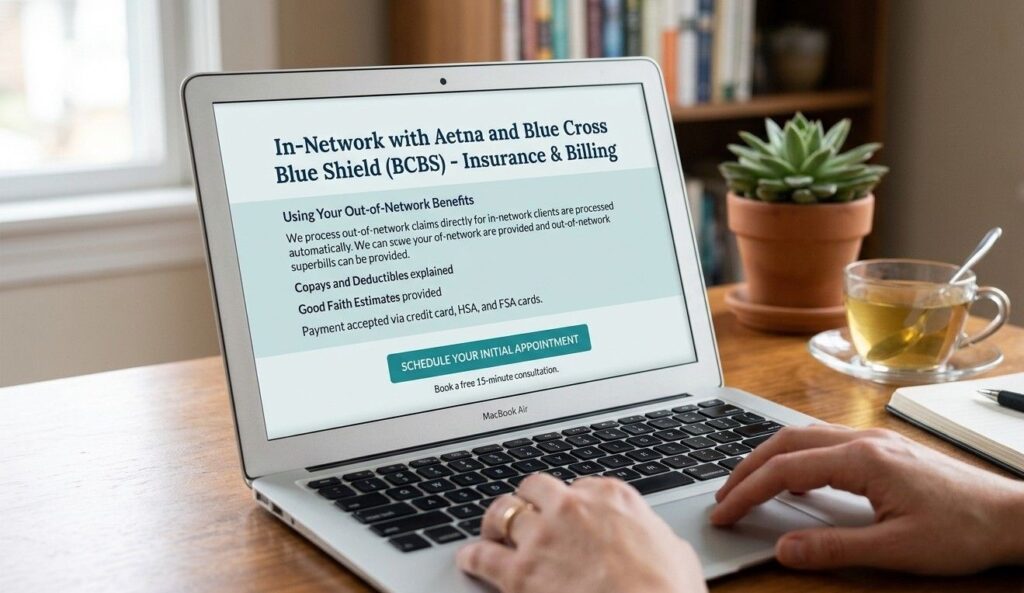
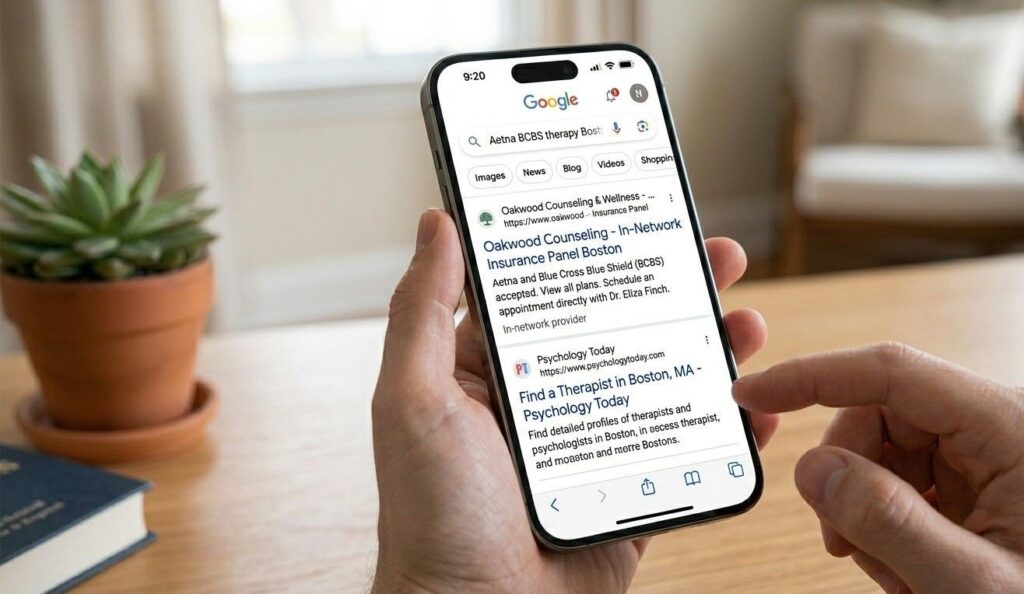
Most therapy websites list accepted insurances in a footer line or a single paragraph under “Fees.” That approach answers the question only for clients who have already found you. It does nothing for the client who hasn’t found you yet and is actively typing “therapist who takes Aetna in [city]” into Google right now. A therapy insurance panel page is a dedicated URL that ranks for that search before the client reaches Psychology Today, Grow Therapy or any directory that competes for the same eyeballs. Building these pages is one of the most reliable ways to grow mental health insurance SEO without paid advertising or referral dependence.
Why Separate Insurance Pages Outrank a Single Accepted Insurances List
A single “insurances accepted” list lives on one URL and targets one page’s worth of SEO signals. Google has to match that single page to every insurer search in your market simultaneously, so it ranks for none of them well. A dedicated page for each panel gives Google a URL with a specific entity, a specific location and a specific service, which is the exact matching pattern that earns strong local rankings.
Think about how practices like Grow Therapy and SonderMind structure their websites. Both companies publish individual insurance pages, for instance one page for Aetna, a separate page for BCBS and another for Cigna, each targeting the exact search query a client types when they already know their insurance and just need to find a paneled therapist nearby. According to iCanotes’ 2026 therapist SEO guide, insurance-focused queries are a primary driver for counselors specifically, because clients seeking accessible care filter by insurer before they filter by specialty, location or even therapist gender.
Because these searches happen before the client has shortlisted anyone, ranking for them puts your practice into consideration at the earliest possible stage. The content strategy I use for mental health clients at wajahatamin.com treats insurance pages as a first-layer local SEO asset, built before blog content and published alongside core service pages.

What Every Therapy Insurance Panel Page Needs to Include
A therapy insurance panel page needs five elements to rank and convert: the insurer name in the H1 and page title, explicit confirmation that you are currently paneled and accepting new clients, your city and neighborhood in the page body, a plain-language explanation of how billing and copays work and a single clear scheduling link or contact button. Pages missing even one of these elements typically rank lower and convert fewer visitors into actual calls.
The On-Page SEO Elements That Make Insurance Pages Rank
The page title format that performs best for this page type combines the insurer name, your role and your location: “Therapist Who Accepts Aetna in [City]” or “BCBS Therapist in [City]: Currently Accepting New Clients.” This title pattern matches the exact phrase structure of the most common insurance-specific local searches.
The H1 can restate the same combination slightly differently to avoid exact repetition. The first paragraph must confirm your paneled status clearly: “I am currently in-network with Aetna and accepting new clients in [City].” That confirmation serves both Google’s intent-matching and the anxious potential client scanning for proof they’ve found the right page.
Include your city name at least two to three times in the body copy in natural context, not as a forced keyword. Also name your primary specialty and one or two conditions you treat most often. According to iCanotes’ 2026 SEO for therapists guide, condition-based keywords like “anxiety therapist who takes BCBS” rank faster in local results than generic specialty terms because the search volume is lower but the intent is higher and far more specific.
The Clinical Information That Converts Insurance Searchers Into Clients
Insurance searchers need two reassurances before booking: that you accept their specific plan and that they understand roughly what they’ll pay. You don’t need to publish exact reimbursement rates or copay amounts because those vary by plan and can change without notice. Instead, explain the process: what it means to be in-network, that the client should call the member services number on their card to verify their out-of-pocket costs and what CPT codes you bill under for an initial session and an ongoing session.
Westside Behavioral Care does this well on their insurer-specific pages, mentioning CPT codes 90791 for the initial evaluation and 90837 for ongoing sessions directly in the client-facing copy. That level of specificity reduces pre-booking friction and signals clinical professionalism at the same time. A direct internal link to your scheduling tool or contact form belongs at the end of this explanation, not buried below a long FAQ.
The content brief structure I use for every therapy practice page maps this kind of specificity before any writing begins, so the page targets the right intent from the first draft rather than needing a significant rewrite later.
Can You Name Aetna and BCBS Directly on Your Therapy Website?
Yes. Naming insurance brands on a therapy website is both legal and standard practice across the industry. Grow Therapy, SonderMind, Thriveworks and every major therapy directory publishes insurer names directly in their page titles, H1s and body copy. There are no trademark restrictions that prevent a paneled provider from stating which insurers they accept. Doing so is a service to the client, not a marketing claim.
The only requirement is accuracy. Only list insurers with whom you hold an active panel agreement. If your panel status changes, update the page immediately. A client who calls expecting Aetna coverage and discovers you’re no longer paneled will not reschedule. That trust break also generates negative reviews that harm your Google Business Profile ranking. Accuracy protects the client relationship and your local SEO simultaneously.
According to TheraThinK’s 2026 mental health reimbursement rate guide, Aetna and Cigna are among the most commonly recommended starting panels for new private practice therapists because of their accessible credentialing processes and broad member bases. BCBS varies significantly by state plan, so mentioning which specific BCBS entity you’re paneled with, such as Anthem Blue Cross or BlueCross BlueShield of Texas, adds accuracy that clients in multi-plan states appreciate.
The healthcare and therapy local SEO guide covers how these named entity signals on therapy pages affect both Google rankings and AI Overview citation rates in 2026. According to Grow Therapy’s 2025 State of Mental Health Report, the most common concerns bringing clients to therapy are anxiety and stress at 34%, depression at 15% and trauma at 9%. Pairing your insurance pages with specialty-plus-insurer combinations like “anxiety therapist who accepts Aetna” captures the highest-intent overlap between condition and coverage searches.
How Long Should an Insurance Page Be and How Many Do You Need?
Each insurance panel page needs enough content to rank and inform: typically 400 to 600 words. That word count gives Google enough text to confirm topical relevance while keeping the page focused enough to convert without overwhelming the visitor. Pages shorter than 300 words often lack the entity signals and local specificity that local search demands. Pages longer than 800 words on a single insurer risk diluting the primary keyword focus with tangential content.
You need one page per insurer with whom you actively hold a panel agreement. For a solo therapist in private practice paneled with Aetna, BCBS and Cigna, that’s three insurance pages plus your general fees or insurance overview page. For a group practice with six insurers across three locations, the math produces 18 to 24 pages. Each combination of insurer plus location gets its own URL.
The GBP optimization process supports insurance pages directly. A complete Google Business Profile listing your insurances, which you can do under the “Insurance” section in GBP, reinforces the same signals your insurance pages build. The GBP optimization guide for 2026 covers how to align your GBP insurance fields with your on-site pages so the two signals compound rather than contradict each other.
The content briefs I build for therapy practices on my SEO content writing services page include a dedicated insurance page brief structure that covers the H1 formula, the billing explanation section and the scheduling CTA format that converts insurance searchers into booked intakes most consistently.
Ready to Bring in Clients Who Are Searching for Your Insurance Panel Right Now?
Insurance searches are happening in your city every day. Each one is a potential client who knows their insurer and just needs to find a paneled therapist nearby. If you want help writing insurance pages that rank, explain billing clearly and convert searchers into intake calls, reach out through my contact page and we’ll look at which panels you hold, which markets you serve and what a page structure looks like for your specific practice. No guesswork, just a clear plan built around the searches your next clients are already running.
Frequently Asked Questions
Do I need a separate page for every insurance I accept?
Yes, if you want to rank for insurance-specific local searches. A single accepted insurances list cannot simultaneously rank for “Aetna therapist [city],” “BCBS therapist [city]” and “Cigna therapist [city]” because one URL cannot target multiple distinct search intents with equal strength. Each dedicated page gives Google a specific entity, a specific location and a specific service. According to iCanotes’ 2026 therapist SEO guide, insurance-focused queries are a primary driver for counselors, so each panel you hold represents a separate ranking opportunity worth building a page for.
How long should a therapy insurance panel page actually be?
Between 400 and 600 words per page is the practical range. That length gives Google enough text to confirm relevance and authority while keeping the page tight enough to convert. Focus the word count on four things: confirming your paneled status, explaining how in-network billing works in plain language, naming your specialty and the conditions you treat most often and directing the visitor to schedule. Avoid filler content about your therapeutic approach unless it connects directly to why a client on that specific insurance plan should choose you.
Should I list my exact reimbursement rates on my insurance page?
No. Reimbursement rates vary by plan, change at contract renewal and differ between individual and group plans under the same insurer name. Publishing a specific rate creates client expectations that may be inaccurate by the time they book. Instead, explain the process clearly: that as an in-network provider your contracted rate is billed directly to the insurer, that the client pays their copay or coinsurance portion and that they should call the member services number on their insurance card to verify their specific out-of-pocket responsibility before their first session.
Can I use insurance brand names like Aetna and BCBS on my therapy website?
Yes, without restriction. Naming the insurers you accept is standard practice across every major therapy platform, directory and group practice website. It is a service to the client and a clear SEO signal to Google. There are no trademark rules preventing a paneled provider from stating which insurers they accept. The only requirement is accuracy: only list insurers with whom you hold an active panel agreement and update the page promptly if your panel status changes. Inaccurate insurance information generates client complaints and damages trust before the therapeutic relationship even starts.
Do therapy insurance panel pages actually generate new client bookings?
Yes. They work because they intercept a client at the highest-decision-intent moment in their search, when they already know their insurance and are actively looking for a paneled provider in their area. According to the Talkspace survey from January 2025, 41% of insured Americans planned to seek therapy that year while only 15% understood their benefits clearly. A page that both confirms your panel status and explains the billing process clearly answers the two questions driving that confusion, which reduces hesitation and lifts booking conversion compared to a generic contact page.